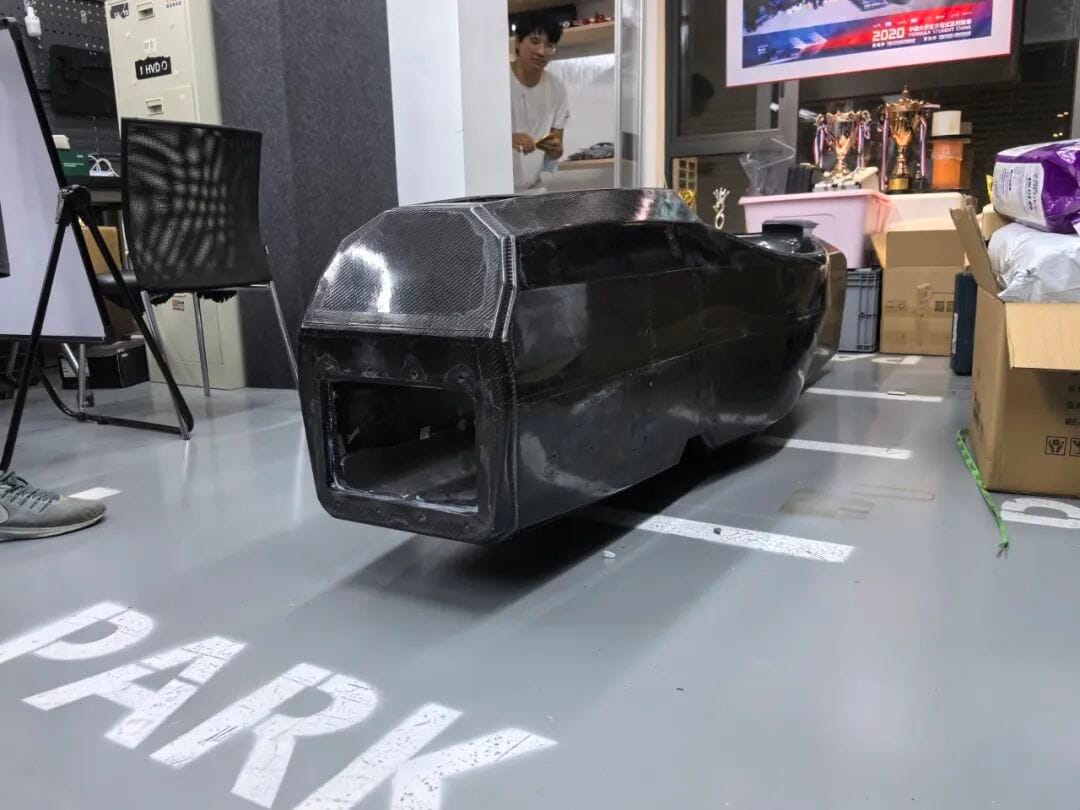
In the world of racing, the monocoque is not only the car’s skeleton but also a core structure carrying its speed and passion. This season, DIAN Racing’s monocoque group completed the design, composite layup and autoclave work for DRe25, laying the foundation for full-vehicle assembly.
Design optimisation: balancing low mass and safety
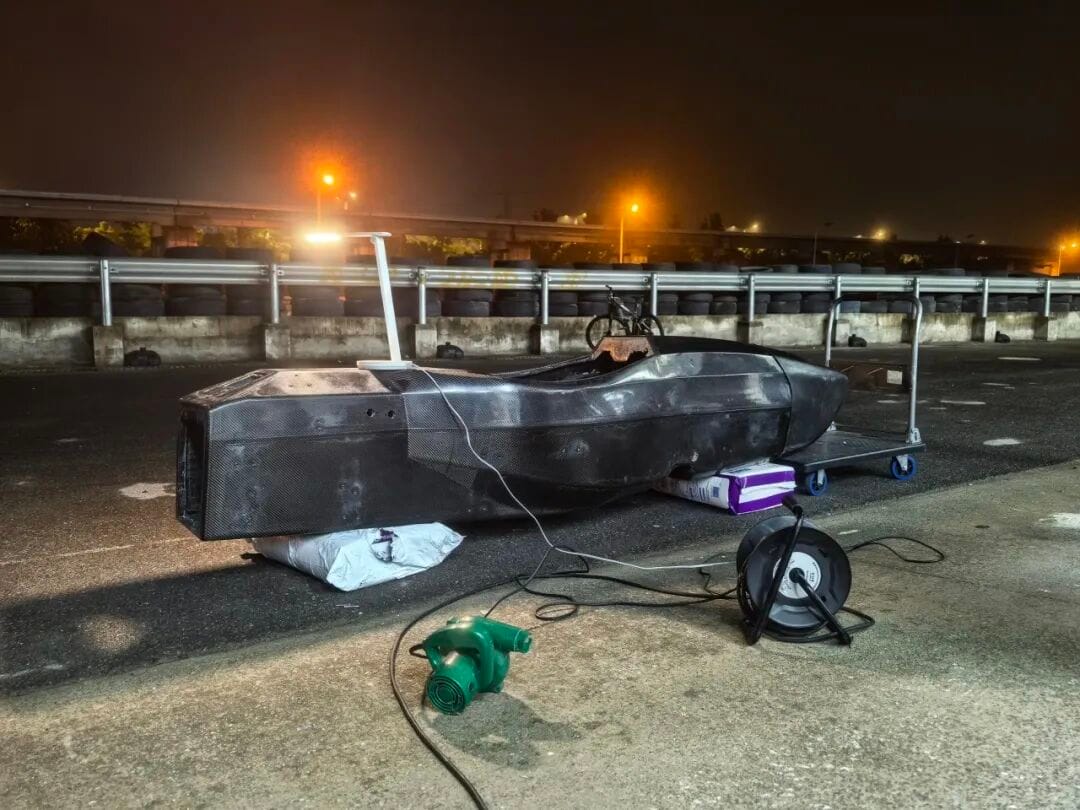
Responding to changes in the regulations, the group completed the monocoque’s shape design and layup optimisation, bringing the entire design to its final frozen state.
Surface area
Compared with DRe24, the surface area of the DRe25 monocoque was reduced by more than 0.1 square metres. Together with an optimised laminate schedule, this delivered a significant mass reduction and further supported vehicle lightweighting.
Shape design
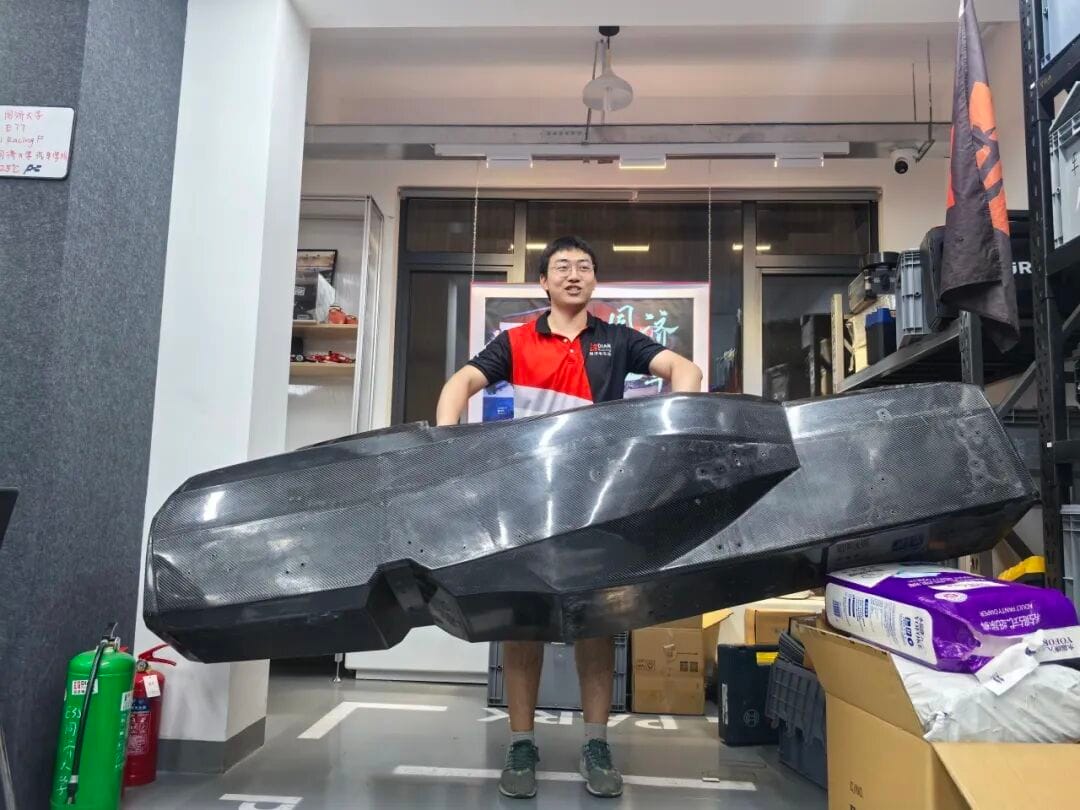
The side-impact region uses an innovative curved design with smoother transitions, improving its appearance while also supporting aerodynamic performance. A new rear inspection window makes assembly and maintenance of the rear systems substantially easier.
Detail optimisation
During design freeze, the team repeatedly verified and refined every detail to ensure that the monocoque met the regulations while supporting the car’s overall performance.
The layup challenge: precision in manufacturing
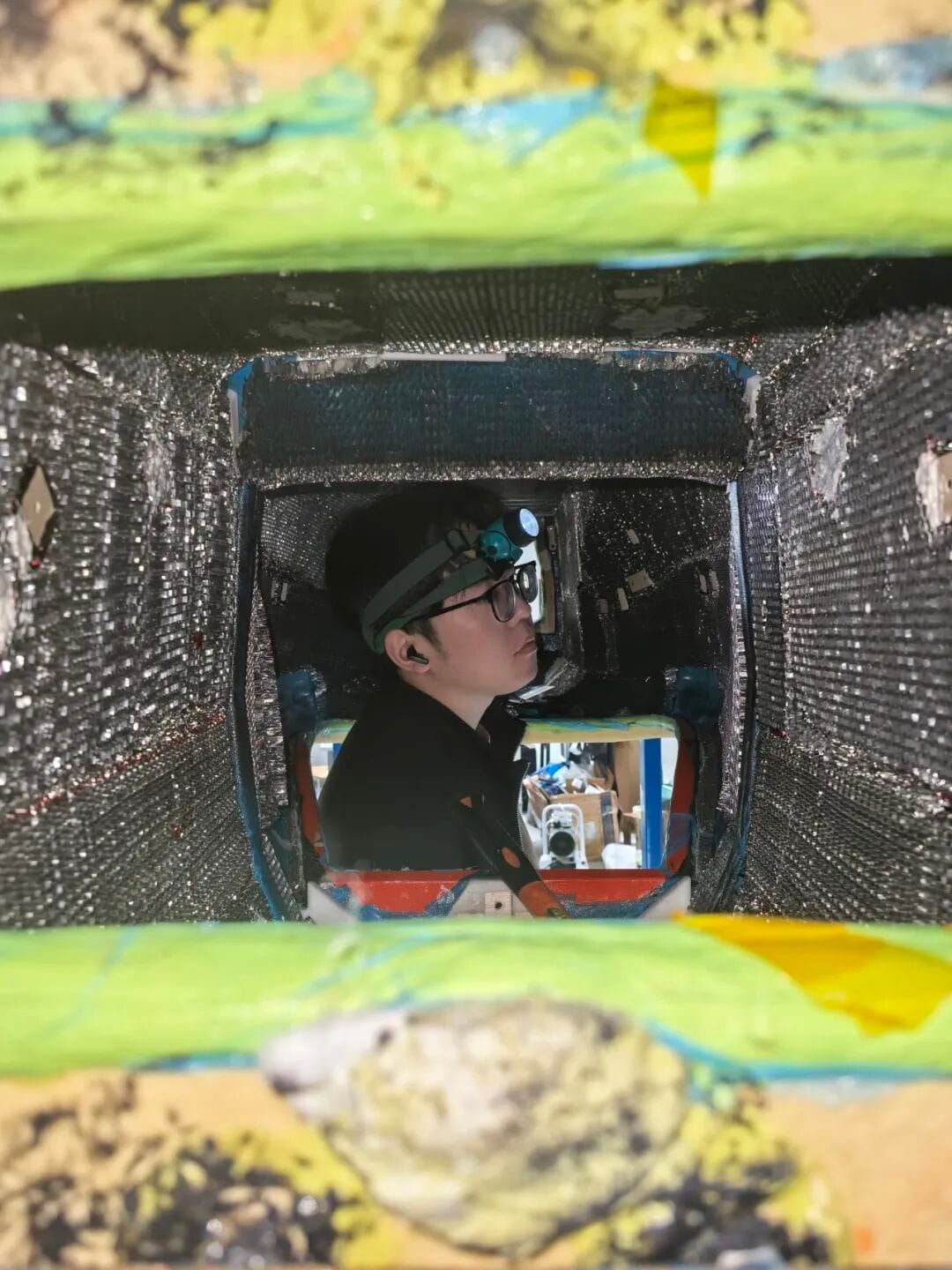
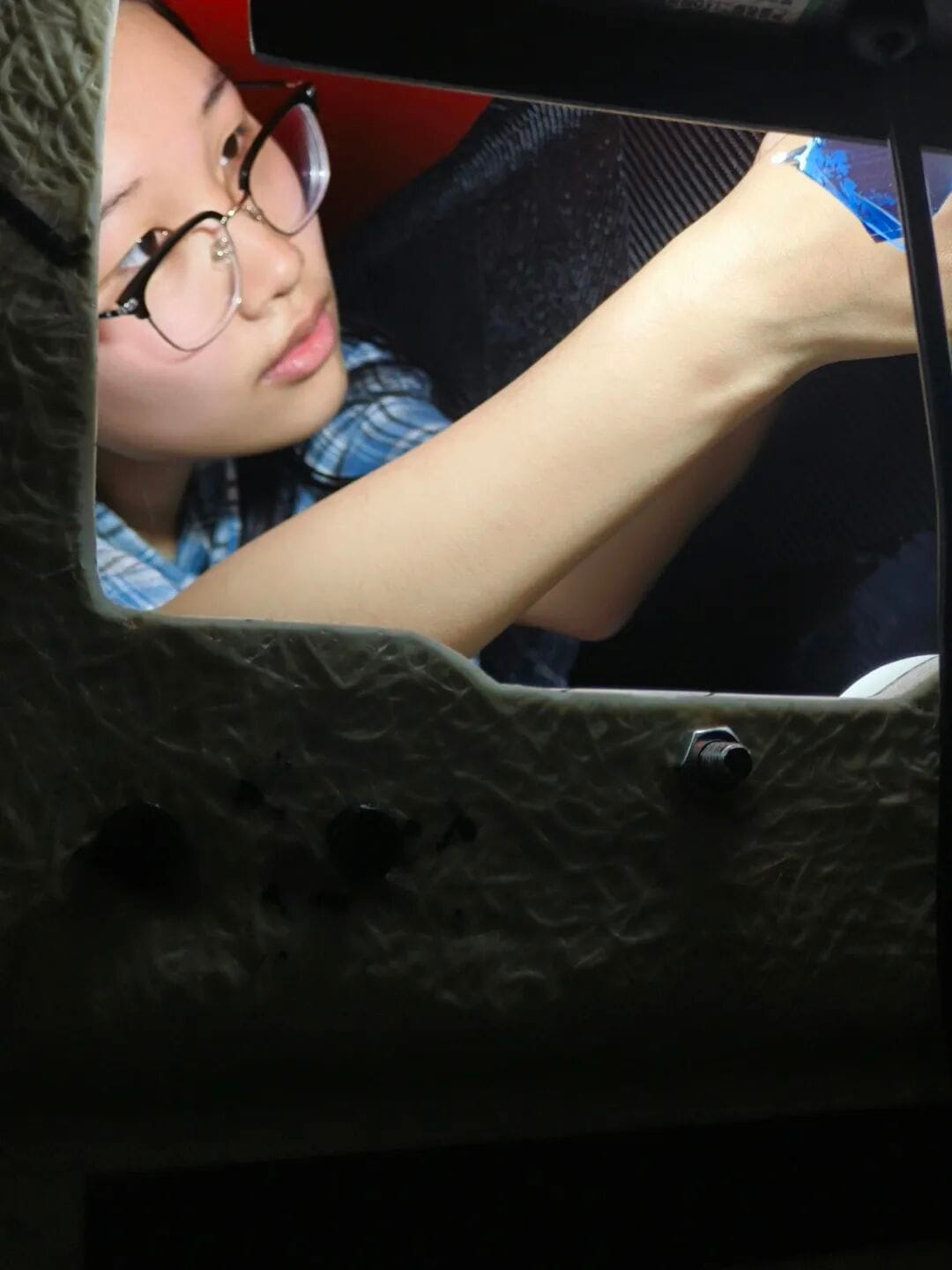
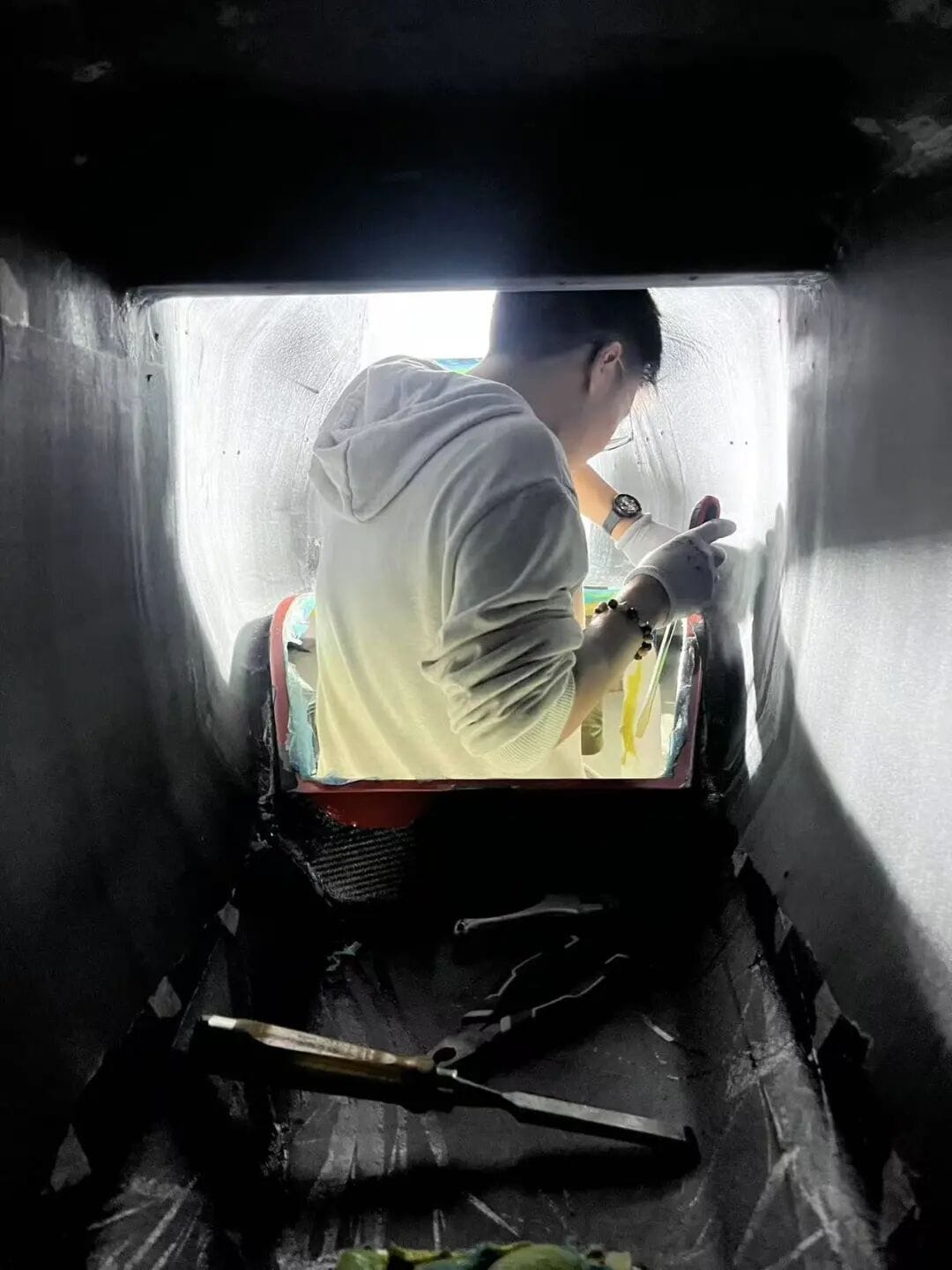
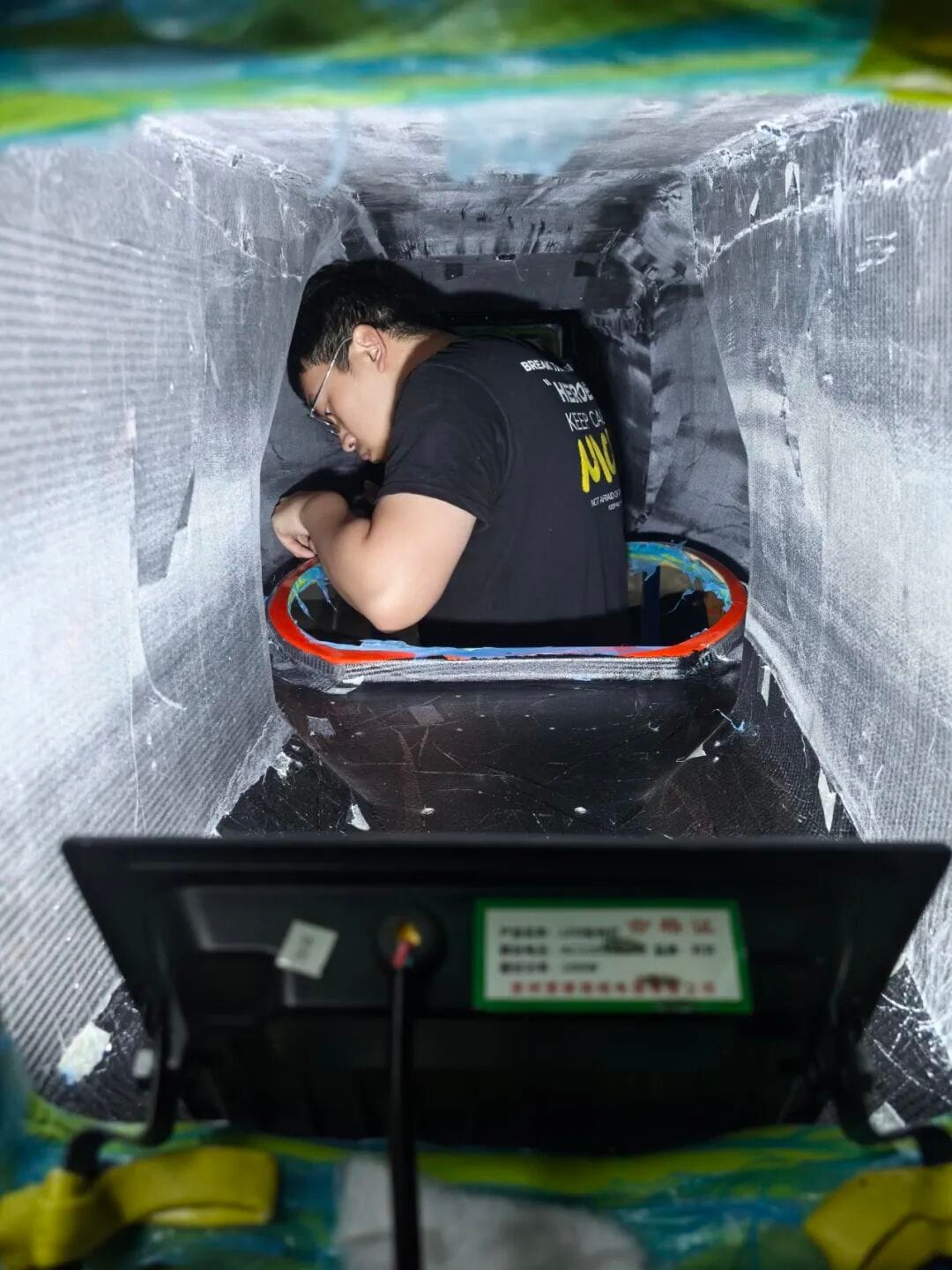
Layup of the DRe25 monocoque began on 6 April. The 23-day process covered four key stages: outer-skin layup, the first autoclave curing cycle, core and inner-skin layup, and the second autoclave curing cycle.
01 Outer-skin layup and the first autoclave cycle
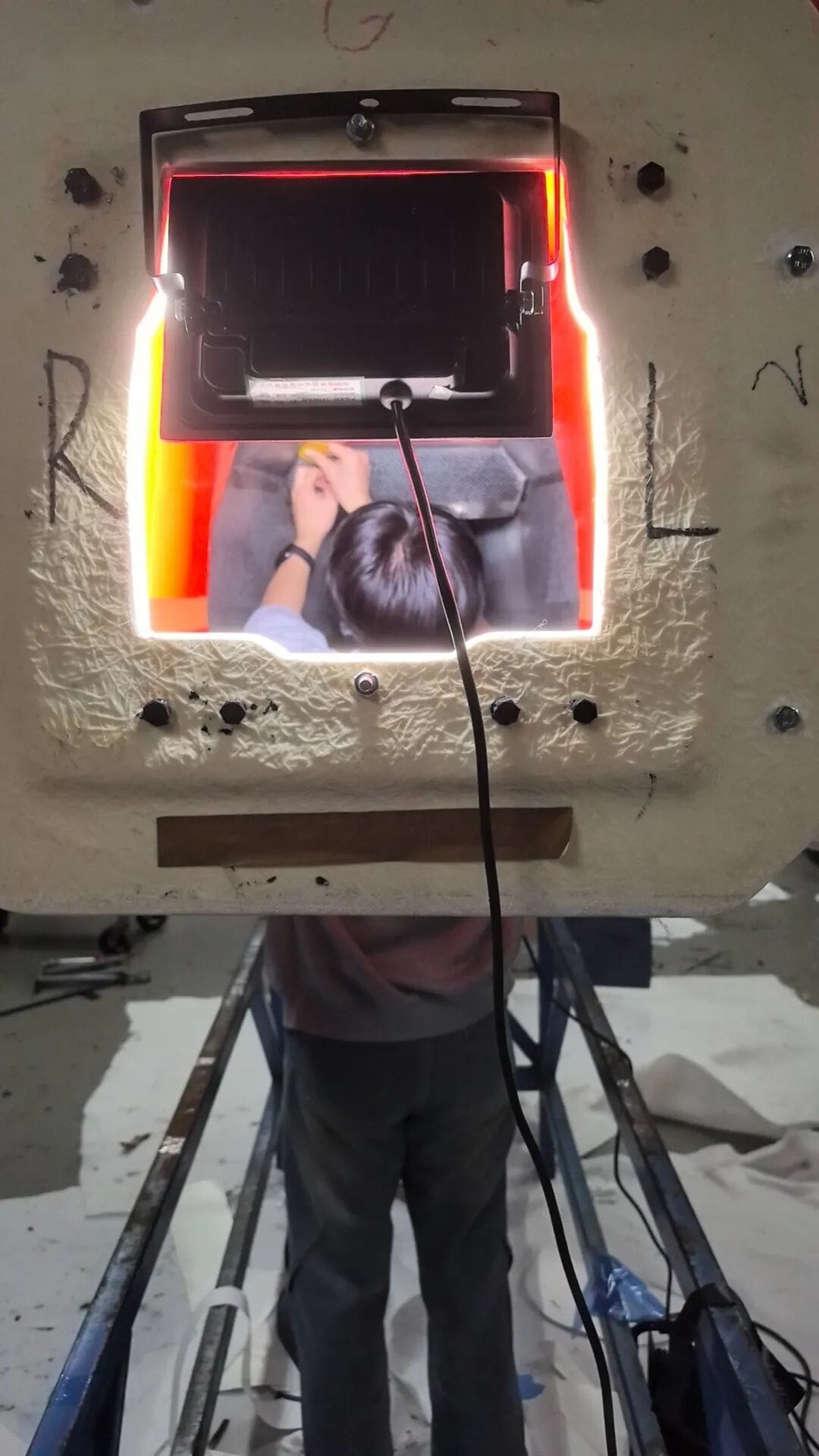
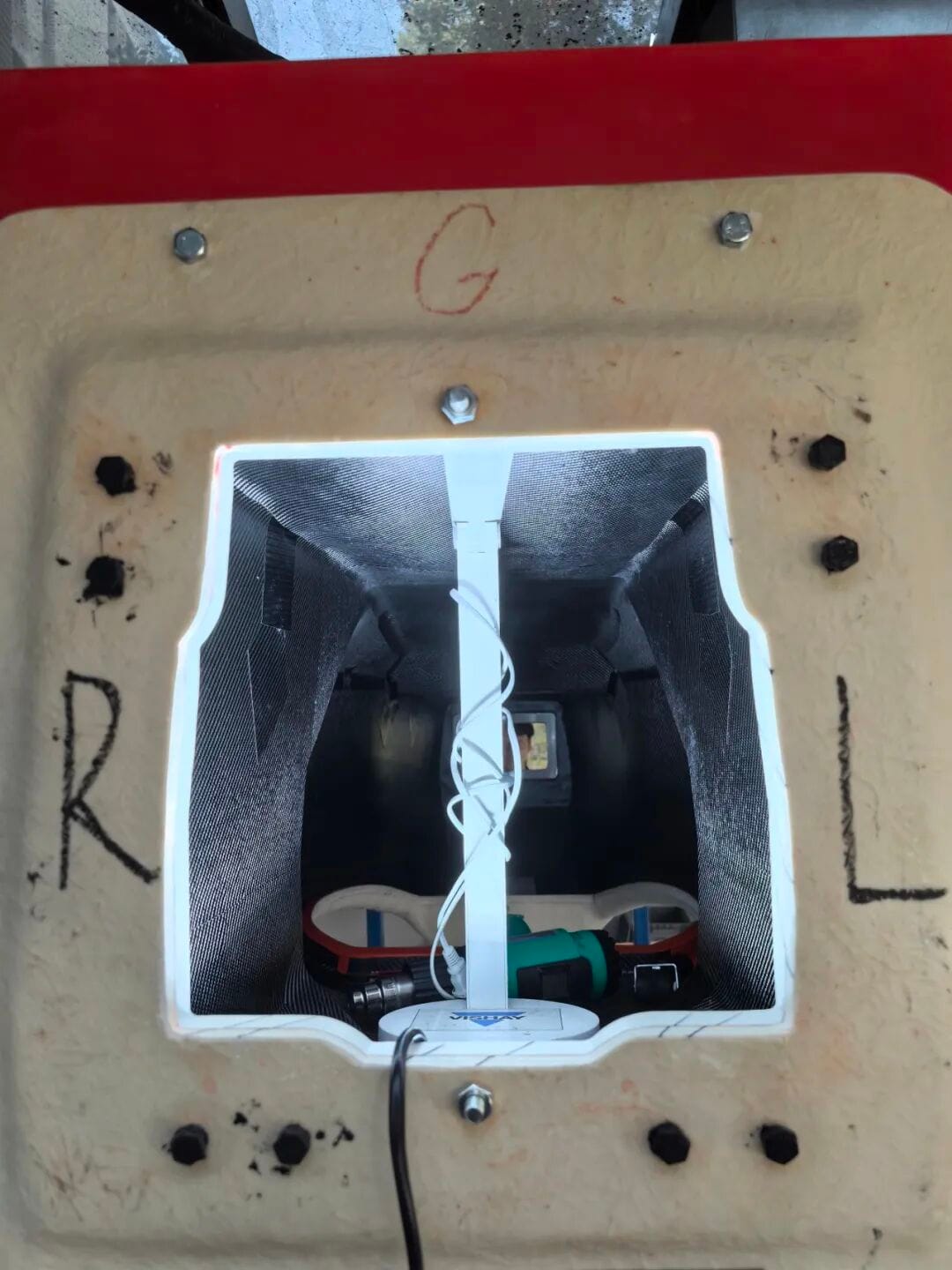
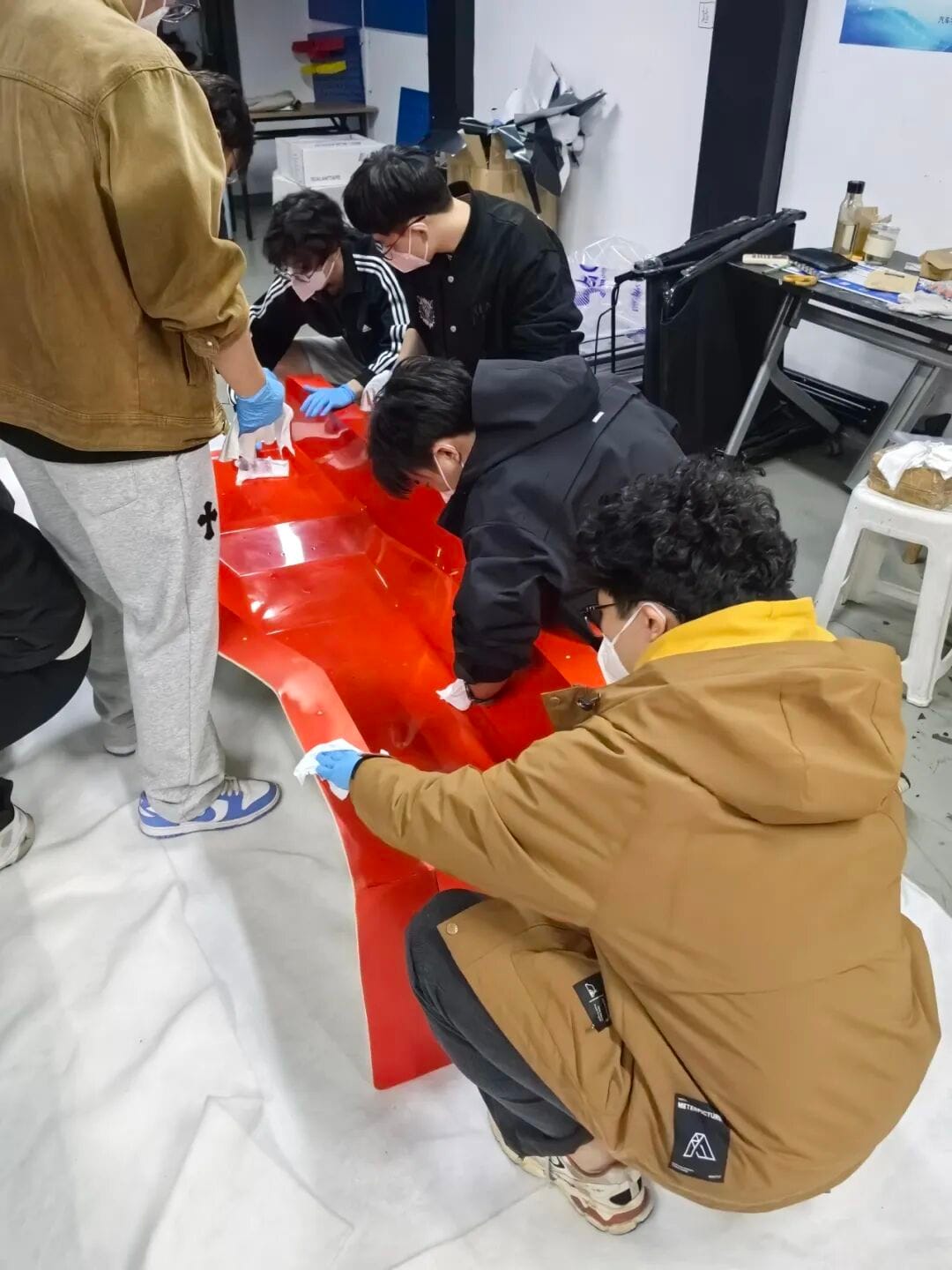
From 7 to 12 April, the team completed the outer-skin layup. To improve surface quality and appearance, the group tightly controlled the overlap width and paid particular attention to the continuity of the carbon-fibre pattern.
The first autoclave cycle began on 16 April. After preparing the mould and applying release fabric and separation film, the team bagged the part, drew a vacuum and quickly raised the pressure to its target. At 11:35, the vacuum bag suddenly failed. Inspection traced the issue to bridging at a flange junction. The team resealed the assembly, increased the vacuum-bag coverage and returned it to the autoclave at 13:26, with pressure remaining stable.
At 13:45, the bag failed again. The team refined its approach by opening the damaged area, filling recesses in the mould and securing the repair with high-temperature tape. Following a third autoclave entry at 15:45, the curing cycle was completed successfully.
02 The second autoclave cycle
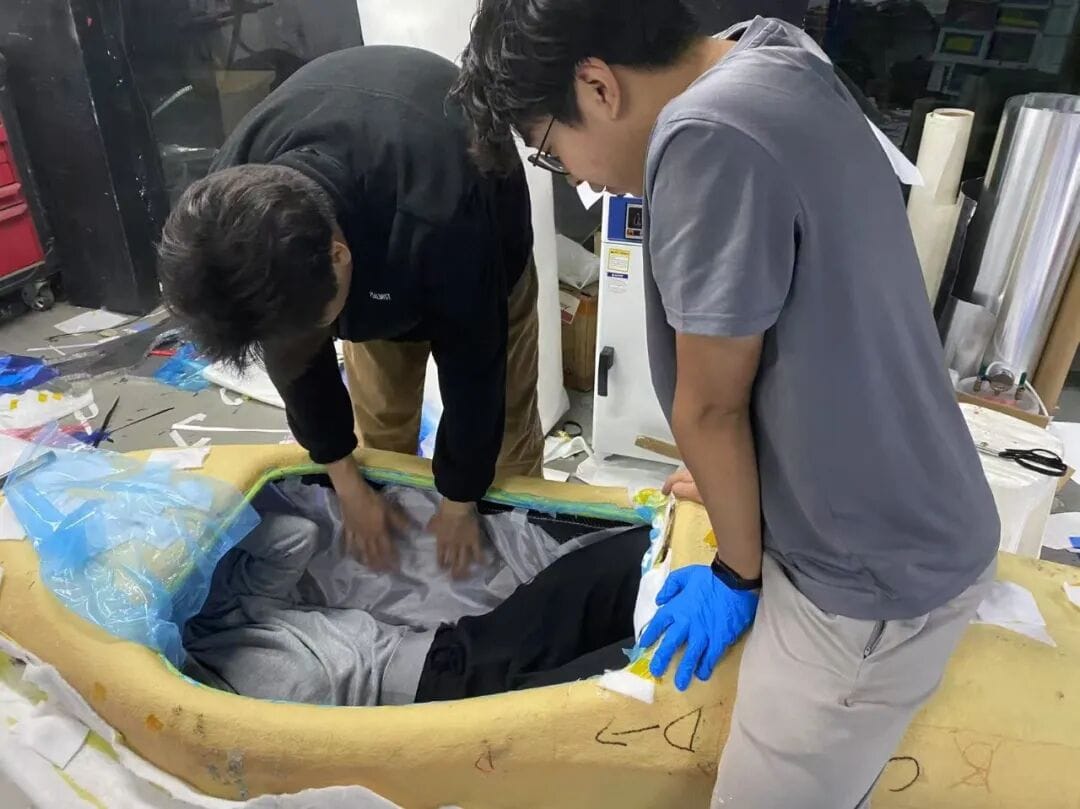
The mould returned to the university on 17 April. Under a tight schedule, the team completed post-processing, core layup and inner-skin layup in succession.
At 19:19 on 29 April, the mould entered the autoclave for the second time. Vacuum remained normal after the target pressure was reached, and the overall process was more stable than the first cycle, delivering good curing quality. By optimising the placement of the breather fabric and the way recessed areas were filled, the team further improved the reliability of the process.
03 Successful demoulding
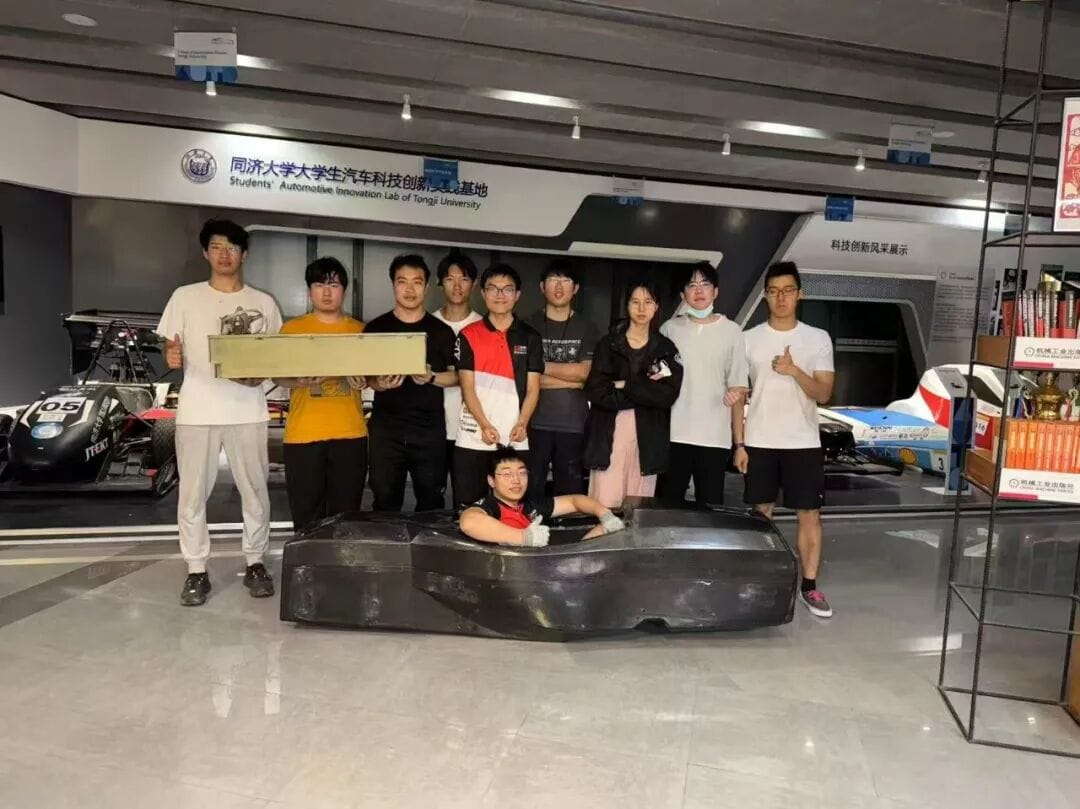
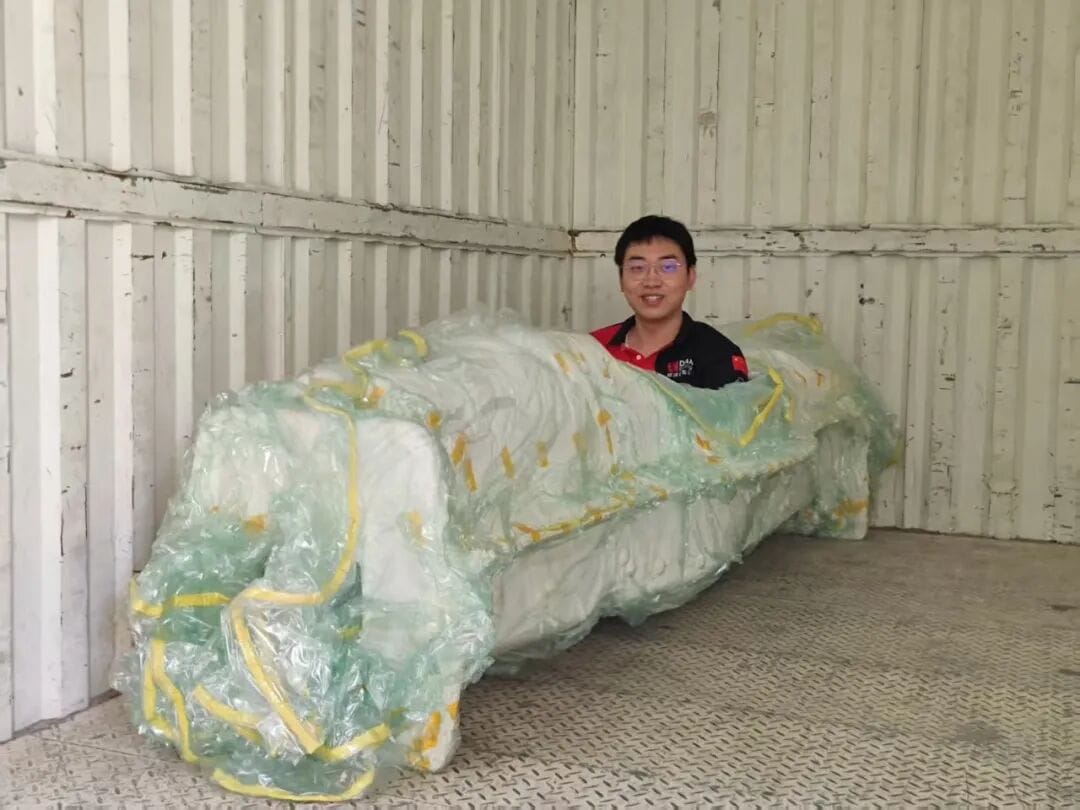
On 30 April, the DRe25 monocoque was successfully demoulded, with surface quality reaching the best level in team history. The result reflects both design and process optimisation and the team’s collaboration and perseverance. Faced with a demanding schedule and difficulties during autoclave curing, the group continued to review its work and adjust its methods until the objective was achieved.
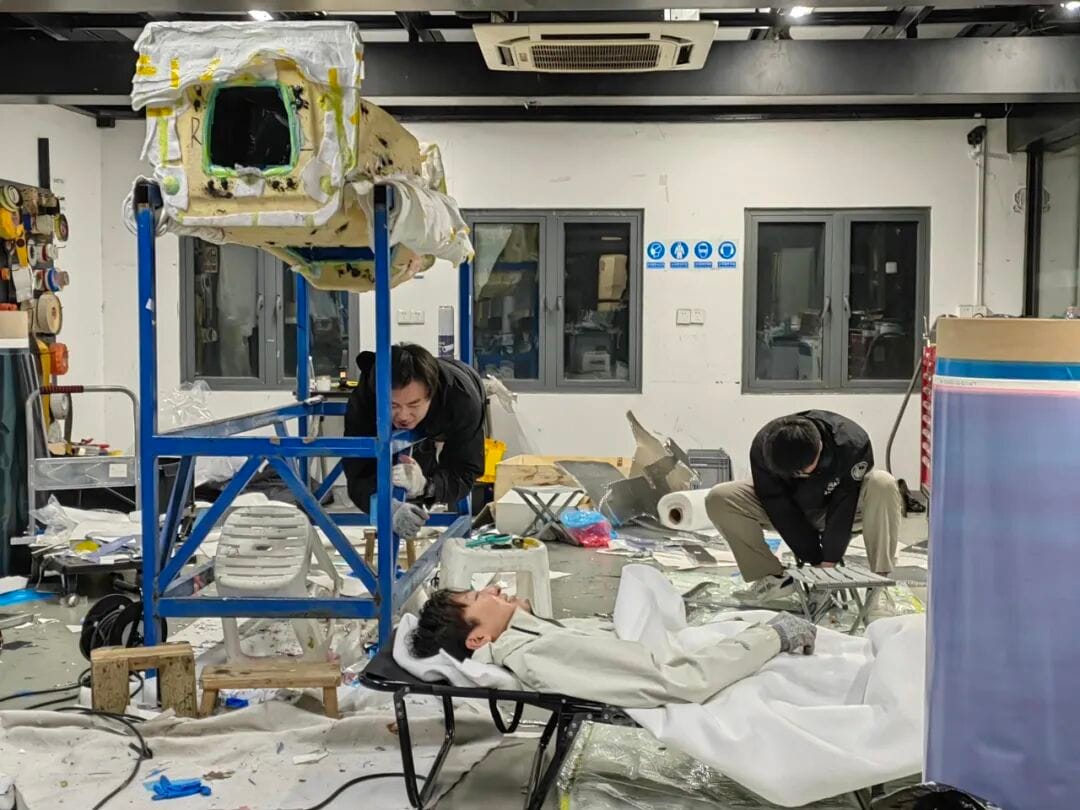
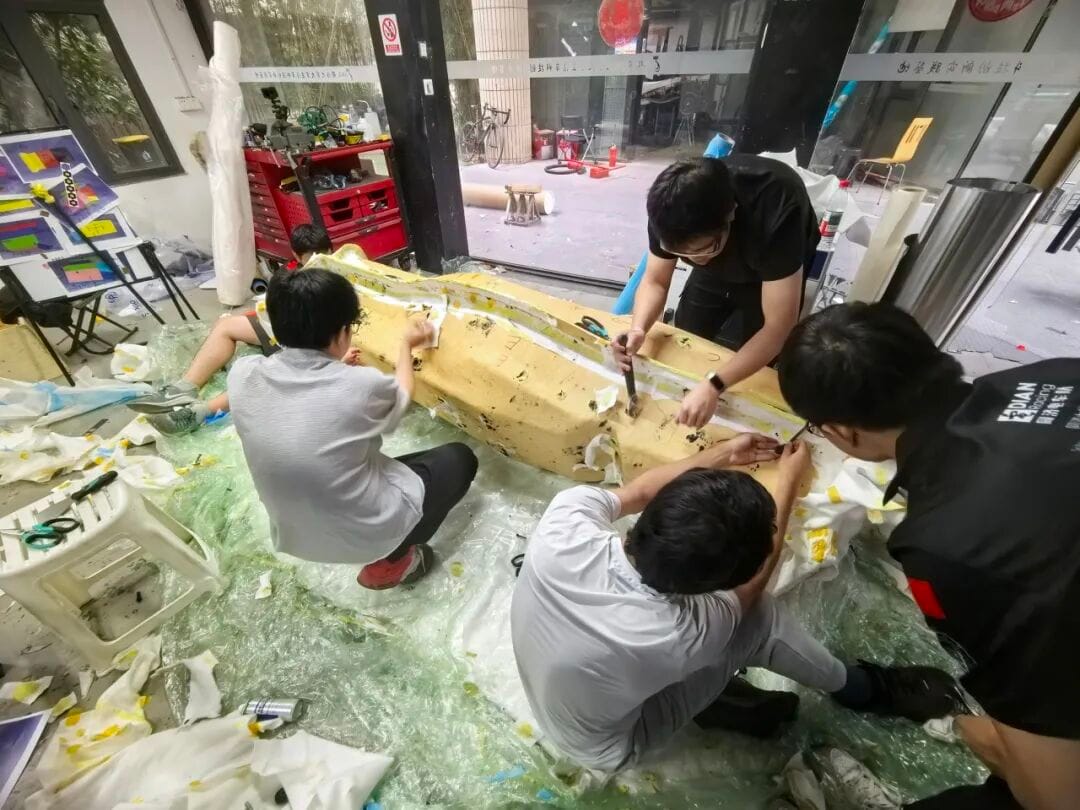
After demoulding, the monocoque underwent sanding, painting, main-hoop welding and 3D scanning. With these operations complete, manufacture of the DRe25 monocoque concluded and the team formally entered the full-vehicle assembly stage.
Looking ahead
Manufacturing the DRe25 monocoque gave DIAN Racing valuable experience. The team will continue to refine monocoque technology and explore new materials and new processes to provide stronger support for vehicle performance.
Future development plans include introducing more advanced simulation software to further optimise the monocoque’s structural design and exploring new composite materials to achieve lower mass and greater strength. The team will also deepen its cooperation with suppliers to secure a reliable supply of high-quality materials.
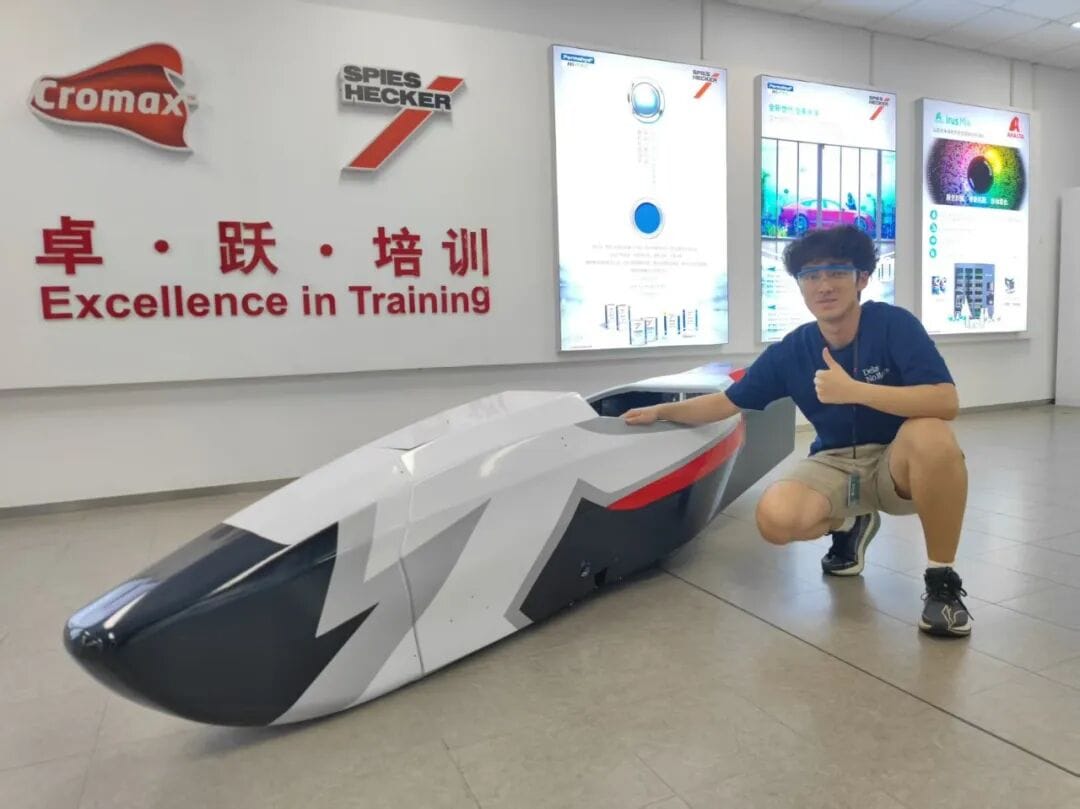
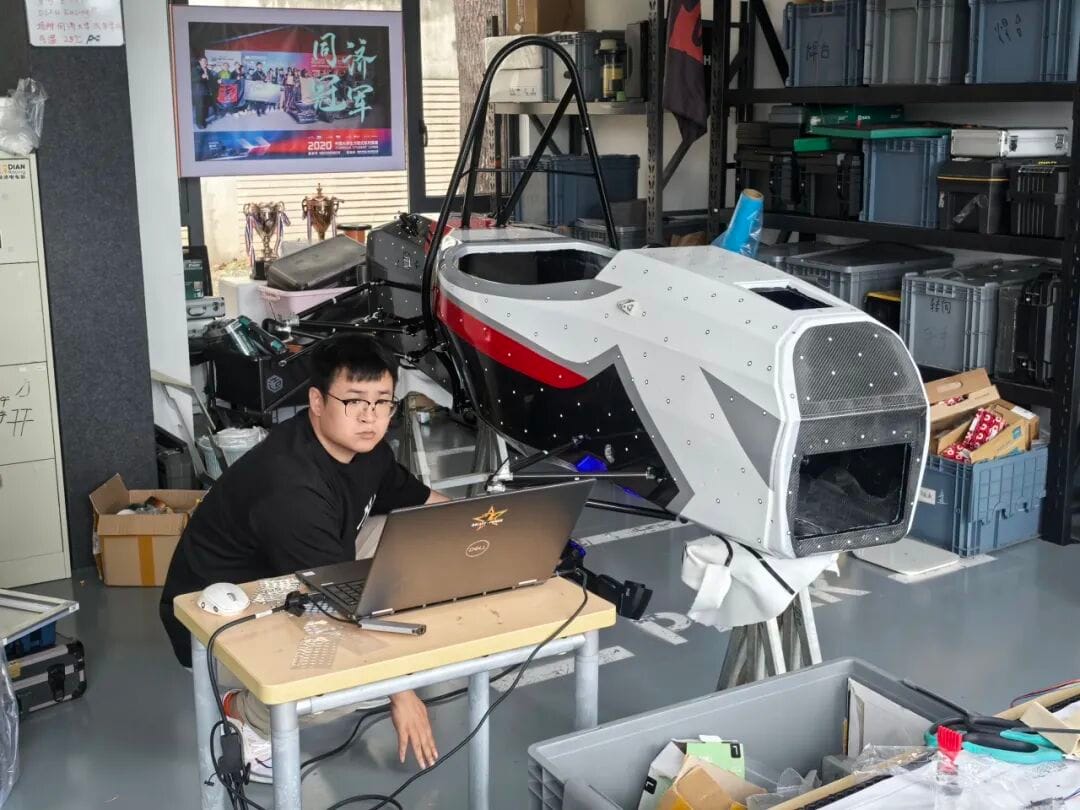
The DRe25 monocoque programme is a shared achievement in technical progress and teamwork. Every challenge became an opportunity to grow, and every success provides a foundation for what comes next.
We thank 赢创特种化学(上海)有限公司, 辽宁北方机械股份有限公司, 海鹰空天材料研究院(苏州)有限公司, 上海沥高科技股份有限公司, 慕贝尔汽车部件(太仓)有限公司, 艾仕得涂料系统(上海)有限公司 and 上海嘉利扬科技发展有限公司 for their support and assistance.
- Text丨王彦皓
- Layout丨王彦皓
- Review丨王娇楠
- Editor丨同济汽车融媒体中心 刘超
- Final review丨李承翰、史静远