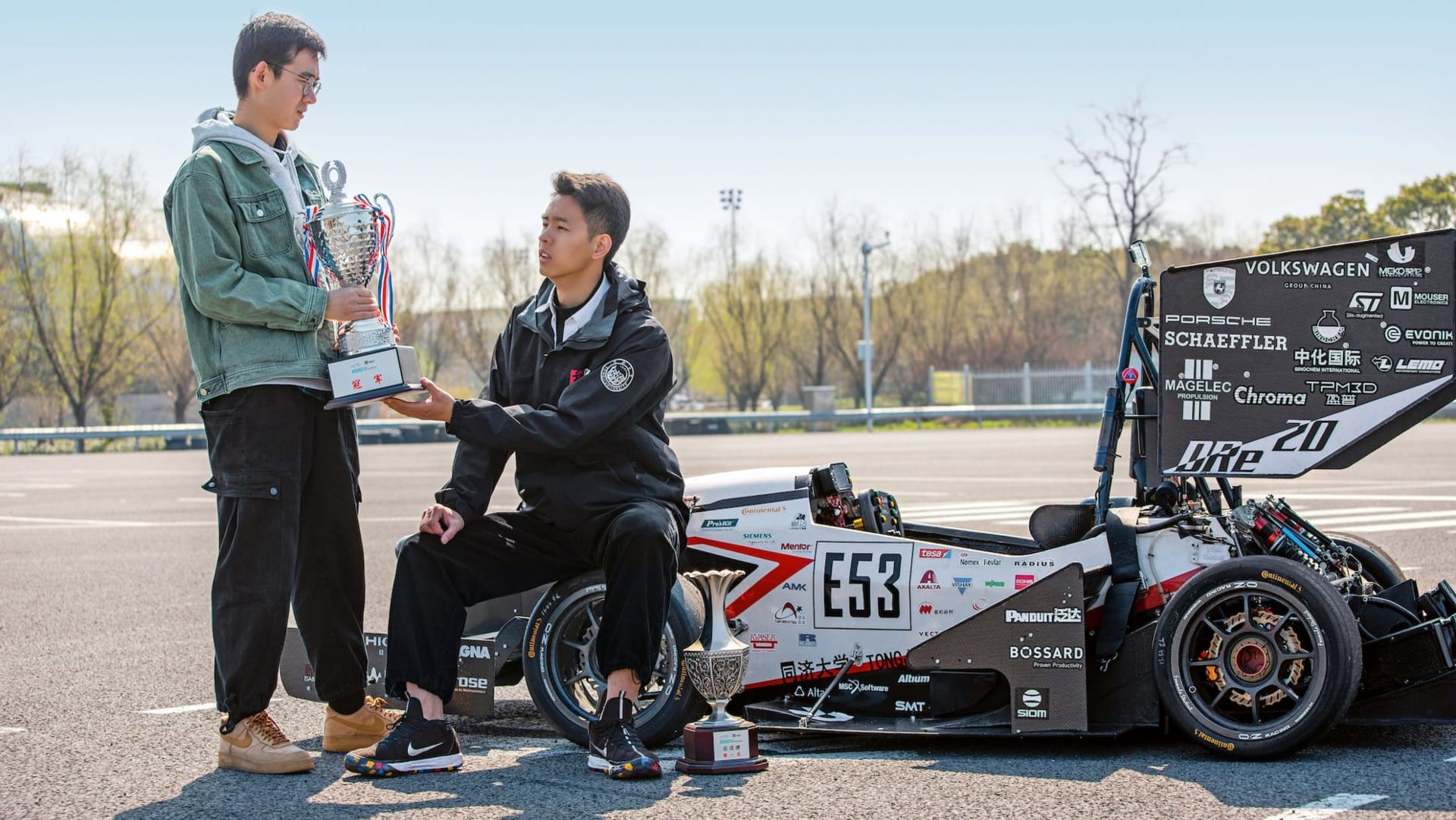
Tongji University in Shanghai is one of the world’s top institutions. Porsche has maintained a close partnership with the university for many years, strongly supporting the development of emerging engineering talent. Liu Fan is one such talent. He is undoubtedly among the brightest of these young stars: he led his team to win the championship in the Formula Student Electric China competition.
If a name can be tied to destiny, then Liu Fan is a case in point. He was born in 1997 in Qinhuangdao, a small coastal city in Hebei Province, where the Great Wall meets the sea at Laolongtou on the shores of the Bohai Sea. Both of his parents are teachers, and they named their son “Fan.” The name has a dual meaning: on one hand, they hoped their child would grow up safe and carefree; on the other, the name carries a philosophical depth—precisely because the name contains “Fan” (ordinary), his parents wished for him to lead an extraordinary life.
“Ordinary but not mediocre” is the creed of Liu Fan’s parents.
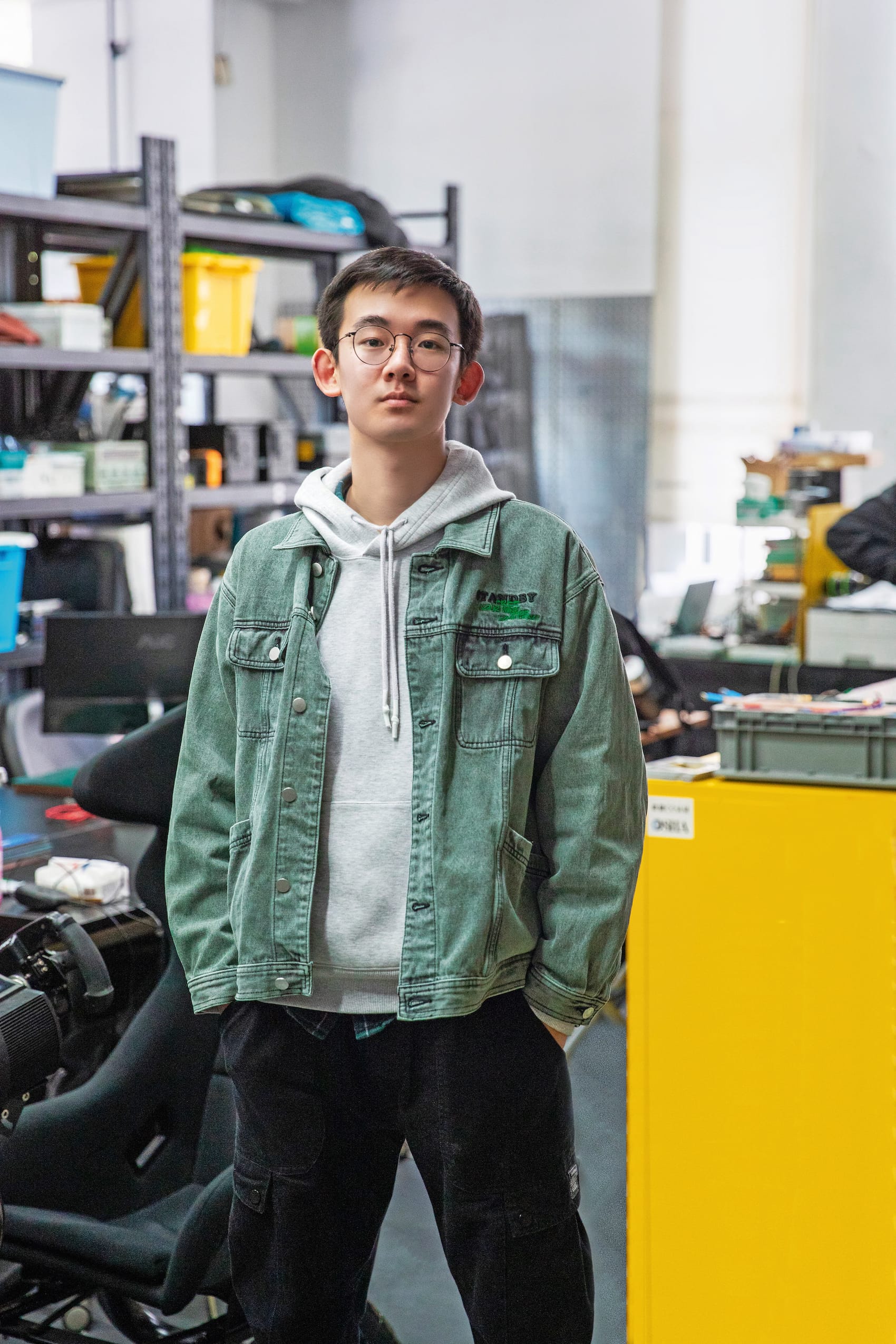
In China, young students who want to attend the university of their dreams must study diligently and pass the rigorous gaokao college entrance examination. The university that admitted Liu Fan is not only among the top tier of Chinese universities but also a cradle for nurturing young engineers—Tongji University in Shanghai.
Now approaching graduation, he has collected numerous awards of varying sizes along the way. The most significant of these came just a few months ago when, as team captain, he led the Tongji University student Formula Electric team to first place. In this innovation competition, university students design and drive pure electric Formula-style race cars. Liu Fan was in charge of a team of about 100 students. Porsche China sponsored the event.
Tongji University’s relationship with Germany dates back further than the first sports car built in Zuffenhausen—a long and enduring history. Today’s leading university began as a medical training school founded by a German doctor in 1907. Neither war nor revolution severed this connection. The Chinesisch-Deutsches Hochschulkolleg (CDHK) at Tongji was established in 1998 and is now seen as a bridge for academic exchange between the two nations.
This special relationship also enabled Oliver Blume, Chairman of the Executive Board and CEO of Porsche AG, to come to Tongji University, where he completed his doctorate: “I felt the enormous creativity of the Chinese people, and also their strong desire to develop themselves and build their country. I was deeply moved by that vibrant energy.”
“I want to start a company directly with my classmates.” — Liu Fan
His motivation to study in China came from one of his doctoral advisors at the time—a Chinese professor teaching at the Technische Universität Braunschweig. It was this professor who introduced Blume to the newly established School of Automotive Studies at Tongji University. In 2001, Blume became the first German to earn a doctorate there. His connection with Tongji has continued ever since. “Oliver Blume visited our team,” Liu Fan recalls, still visibly excited. “That only heightened my passion for Porsche.”
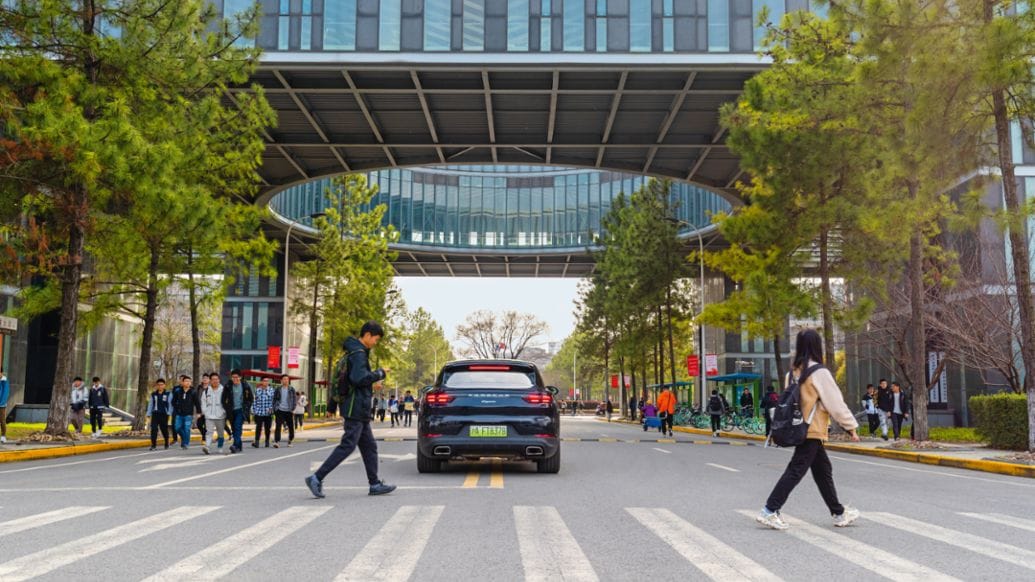
Rising star: Porsche and Tongji University collaborate to advance intelligent vehicle research.
This year marks the 20th anniversary of Porsche China. Porsche China has experienced an astonishing rise—since 2015, China has been Porsche’s largest single market. Over the years, Porsche has carried out a rich variety of social and cultural activities in China. In April 2019, Tongji University and Porsche signed a cooperation agreement. The memorandum includes establishing a Sino-German chair in intelligent vehicles and more knowledge-transfer projects in education and training. Experts from Porsche Engineering came to Shanghai specifically to provide professional guidance to the students. When the pandemic hindered travel, the experts switched to online lectures. In this way, the tech enthusiasts of the DIAN Racing Team received driver training on the F1 track at the Porsche Experience Centre in Shanghai—lessons that were less theoretical and filled with sporting passion. This included an energy management course for moving objects: the young trainees drove the Porsche Taycan.
Fertile Ground for Start-ups
The research emphasis on diverse digital features is also a major topic in China. Nowhere else in the world do so many start-ups take root and flourish. The younger generation is seen as key to the future of automotive development. This is underscored by the average age of Porsche customers in China—35, compared to 53 worldwide. Moreover, in China, half of Porsche owners are women.
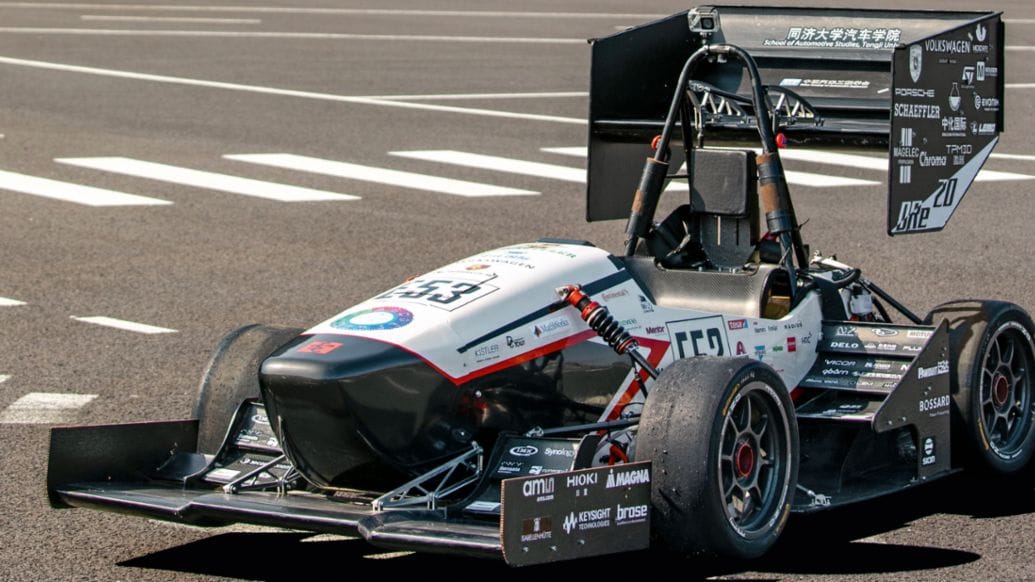
Electric Formula race car DRe20
Liu Fan discovered his fascination with cars early on while playing with remote-controlled racing cars. But for an 8-year-old, the yearning for speed was not as strong as his interest in how the tiny toy car worked. Gradually, his curiosity about electric drive systems was sparked. Liu Fan doesn’t hesitate to point out that the idea of an electrically driven vehicle is nothing new. “After all,” he says, “Porsche presented the Lohner Porsche electric car as early as 1900 at the Paris World Exhibition.”
“I love the feeling of implementing solutions with a determined team under high time pressure.”
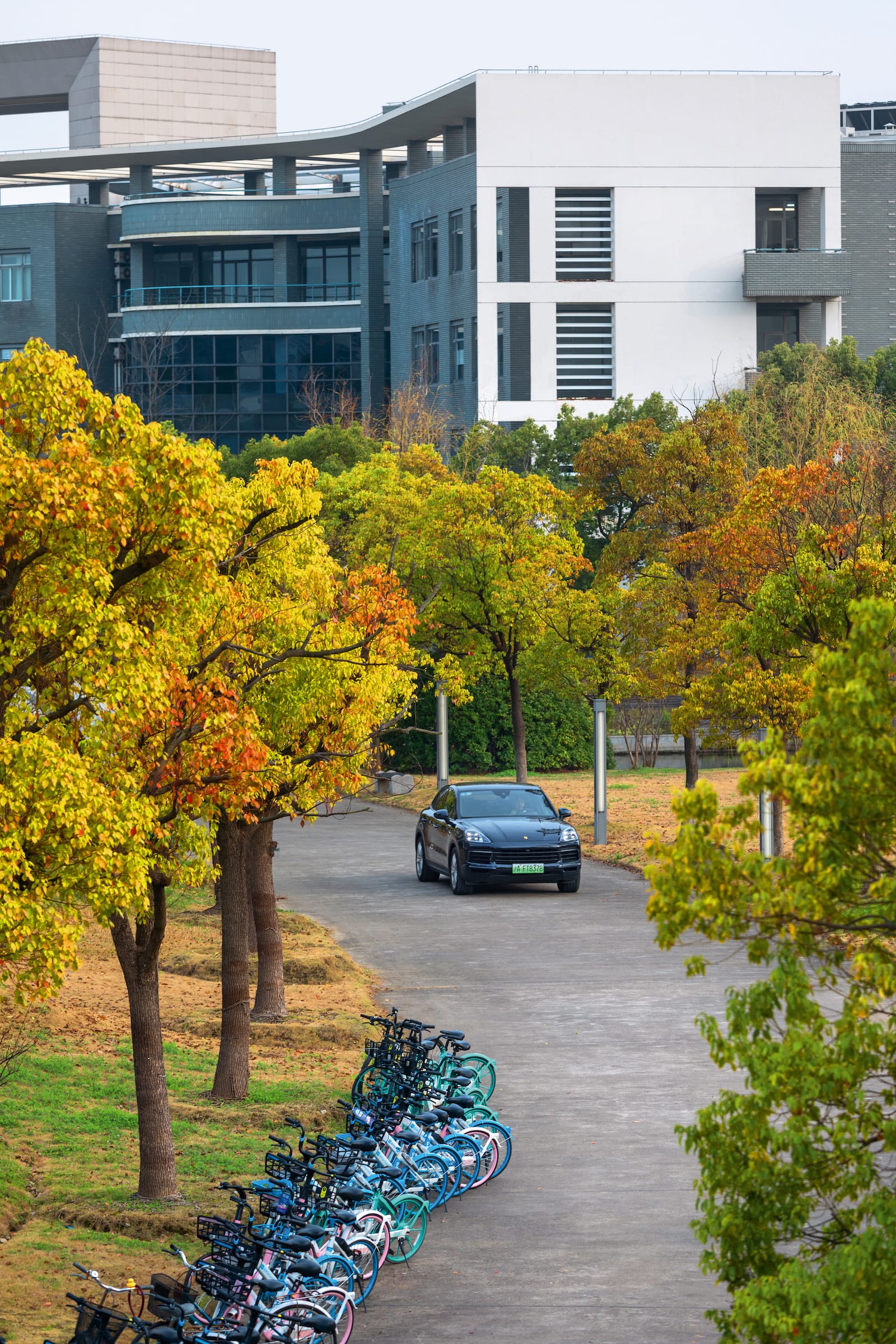
Liu Fan found that the hybrid drive system of that vehicle lives on in the Porsche Cayenne E-Hybrid he drives on campus. Liu Fan is a fan of electric drive systems. His current dream car is the Porsche Taycan. But the project closest to his heart remains the championship-winning car of his Formula Electric team—the sleek DRe20 with its distinctive rear wing.
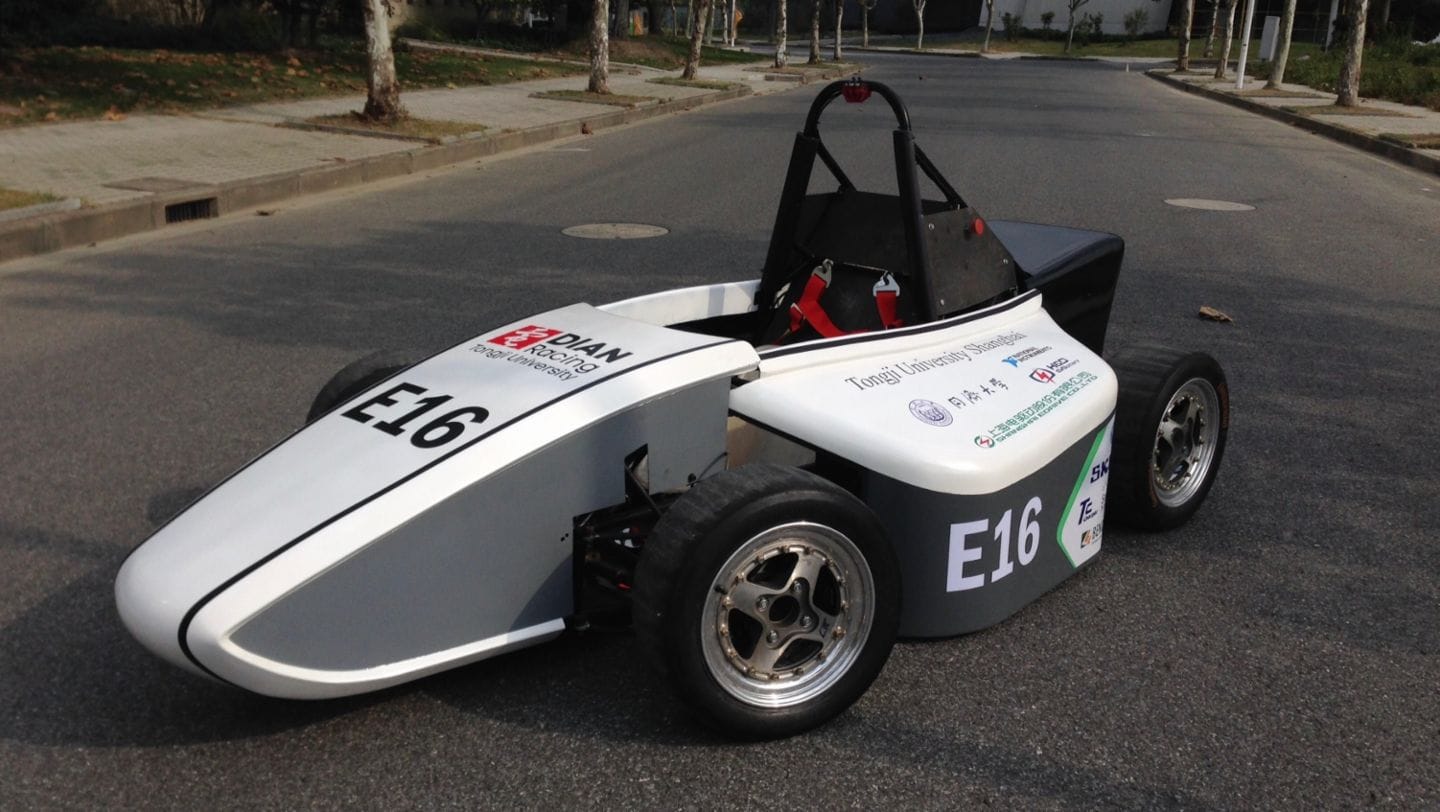
The DRe20 racing car is the culmination of an exciting journey. The early DRe13 version hints at the destination but still weighs 440 kilograms.
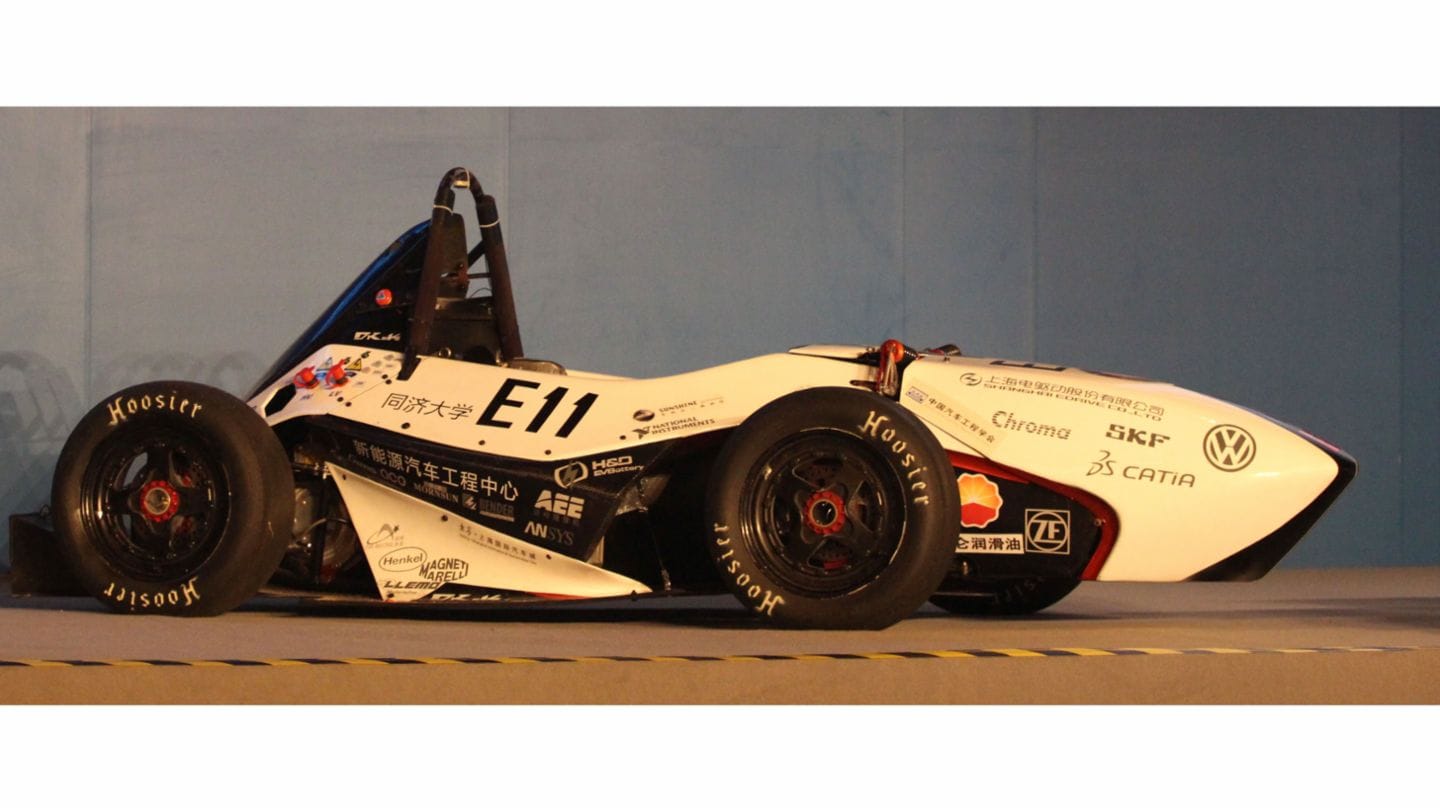
The DRe14 successor model is 122 kg lighter. The DIAN Racing team from Tongji University is responsible for developing the car. Its 100-or so members all contribute unique strengths.
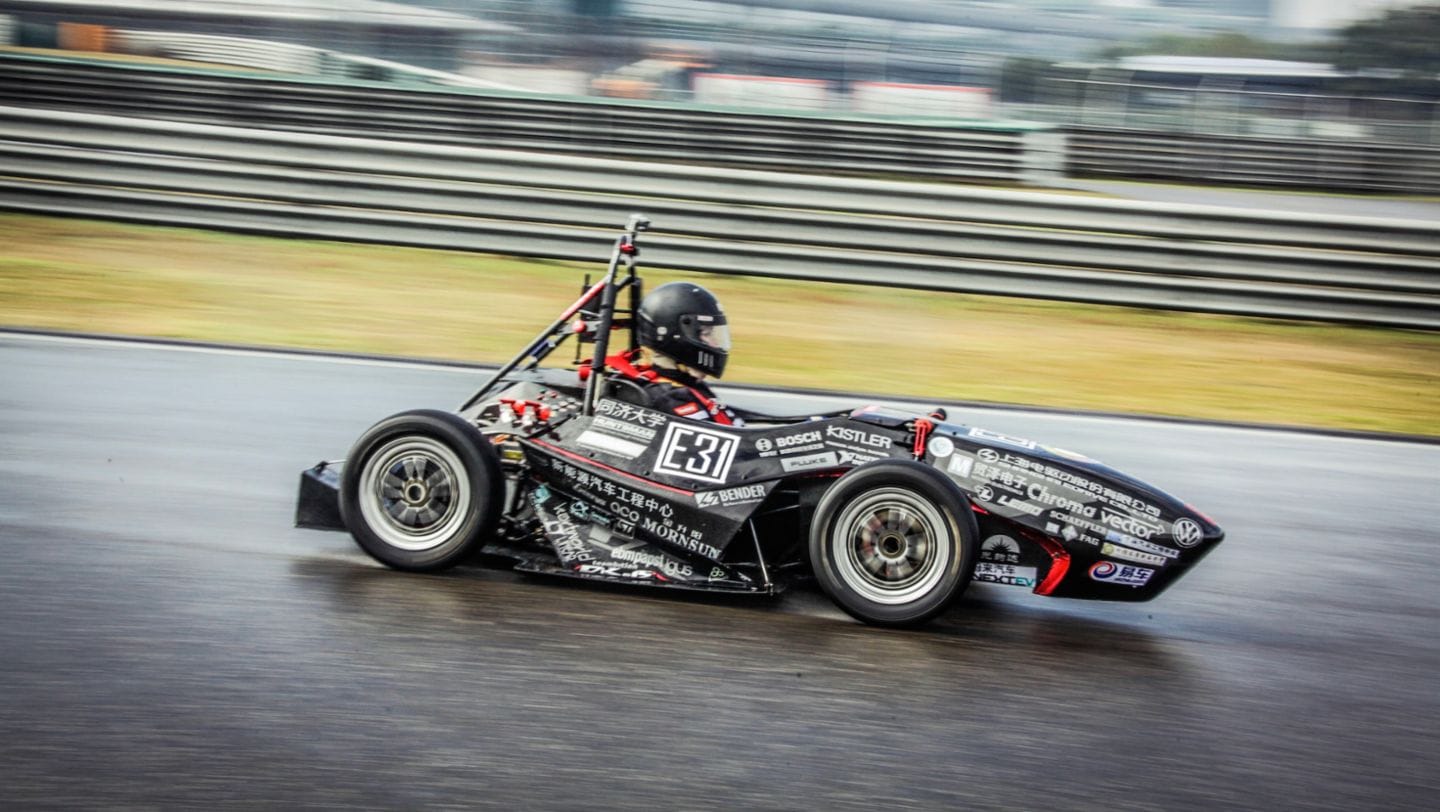
Development focuses not only on the inner workings. The visuals of the DRe15 are clearly more aerodynamic. The car has a peak speed of 140 km/h.
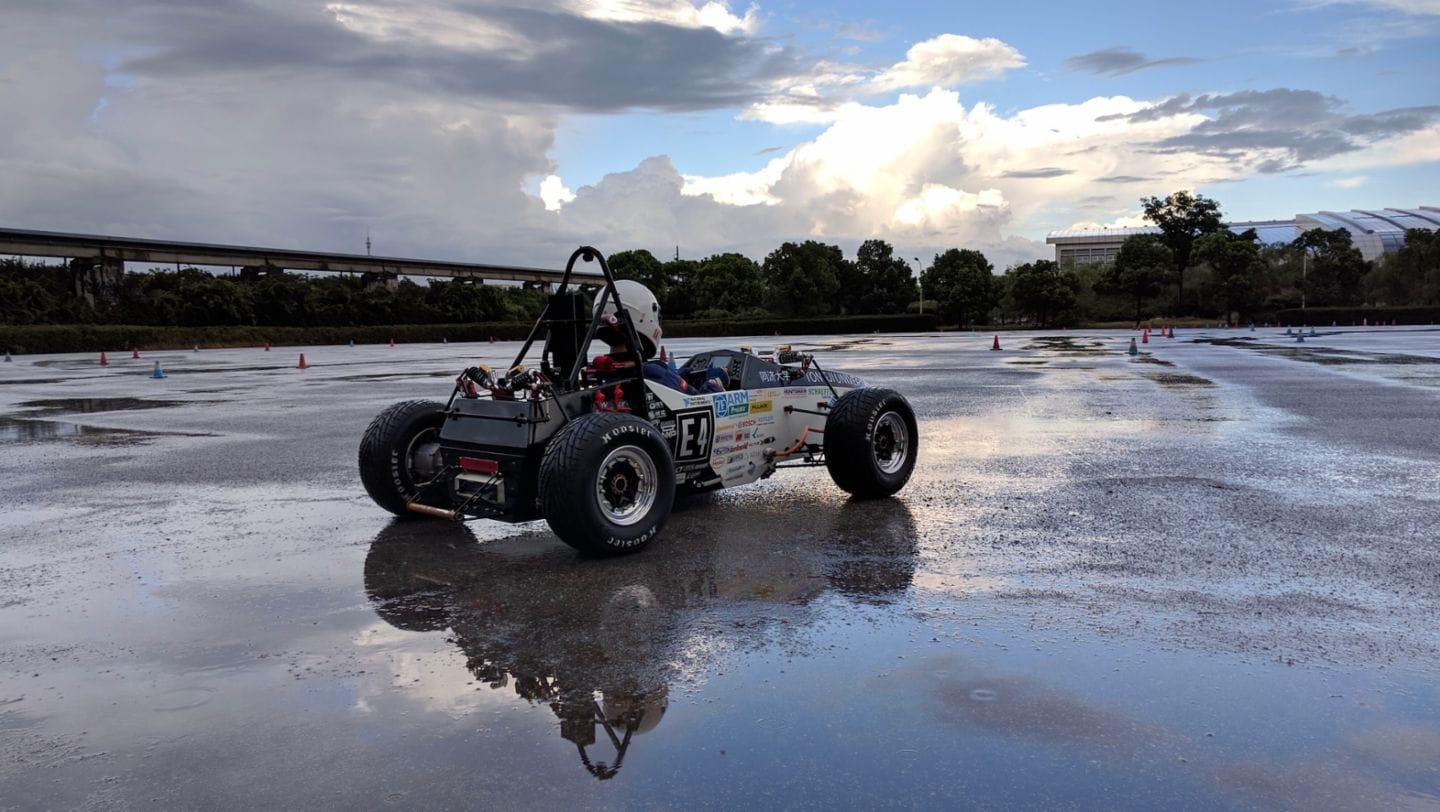
The DRe16 has all-wheel drive. The racing team strives for environmentally compatible mobility. The battery pack has a voltage of 532.8.
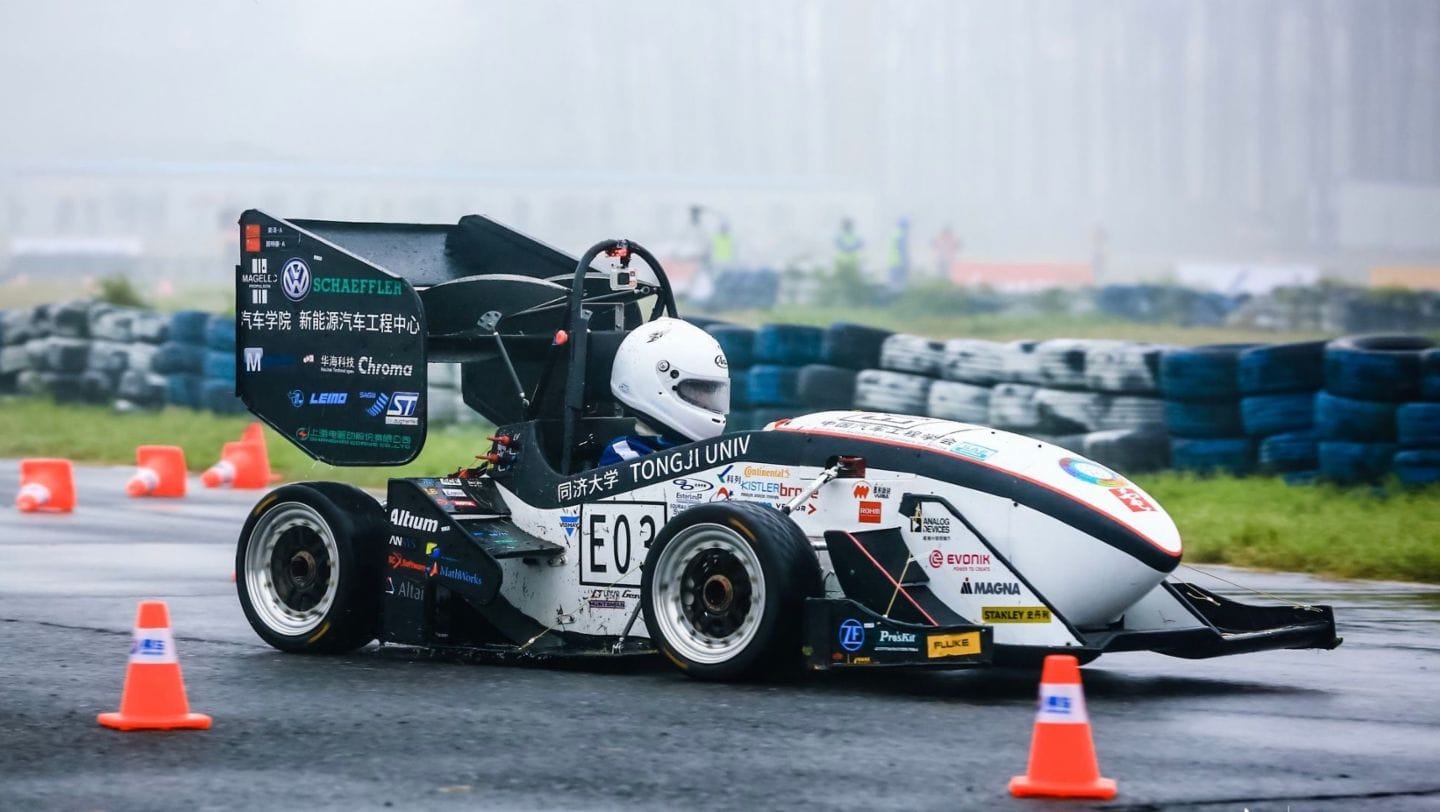
In development stage DRe17, the front and rear wings are added to increase downforce. The car now weighs only 244 kg.
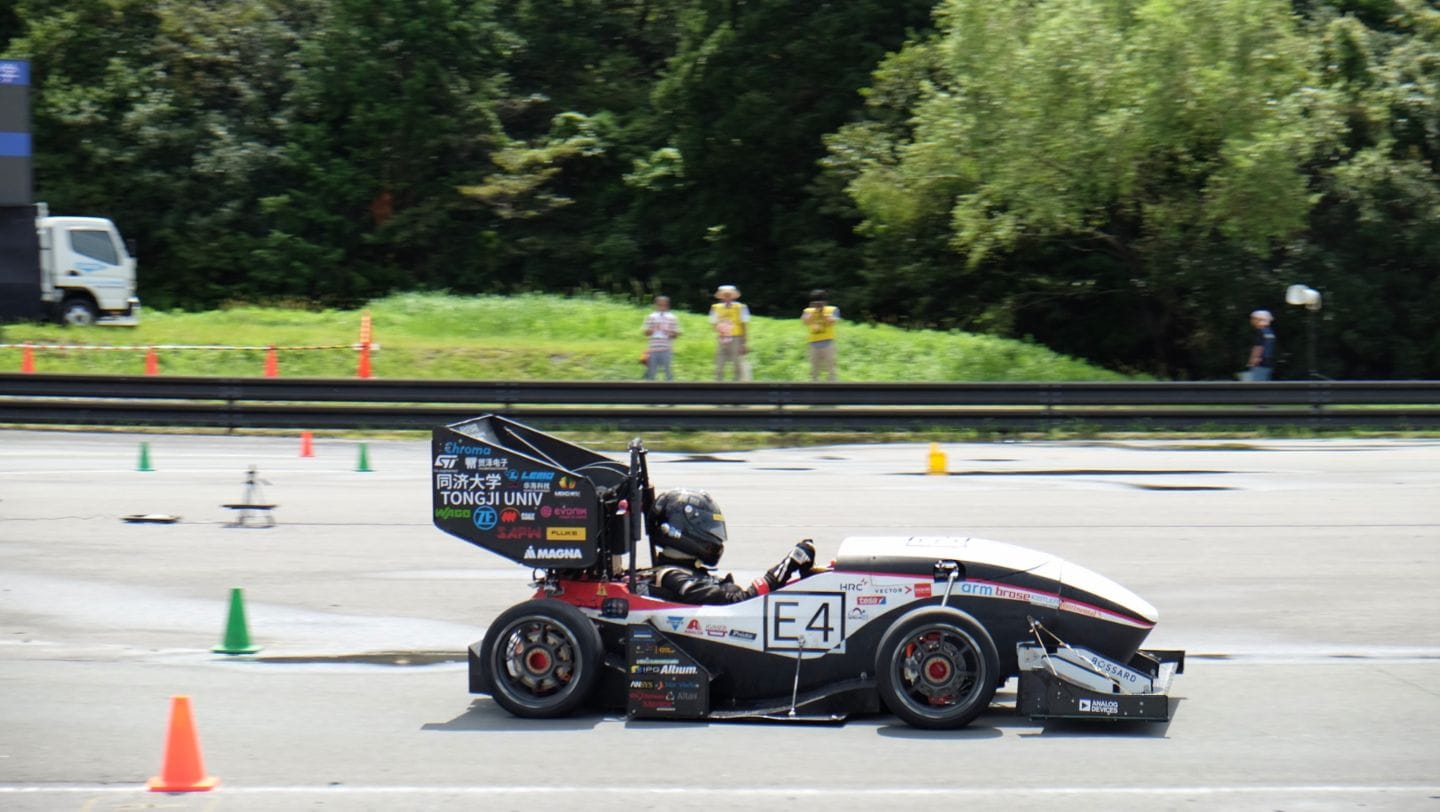
Technology and design in harmony: the shape of the nose and front wing are perfected in the DRe18. Its track width is optimised to enhance performance when cornering: at 48:52 millimetres, it is now somewhat larger in front and leaner at the back than in the initial development stages.
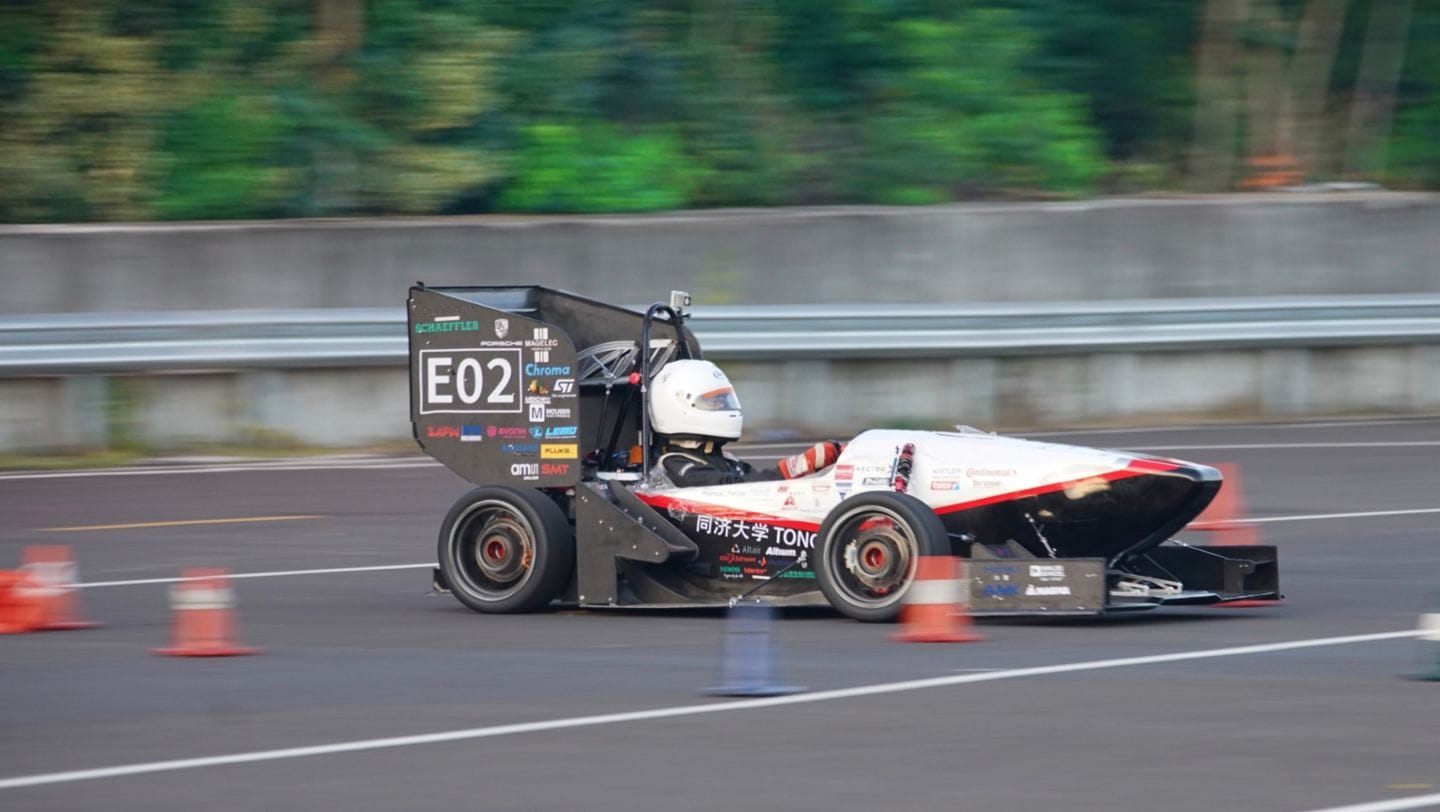
Almost there: the DRe19 closely resembles its successor. The last thing to do is adjust the dimensions. Around 10 kg is shed to reach the final weight of 200 kg.
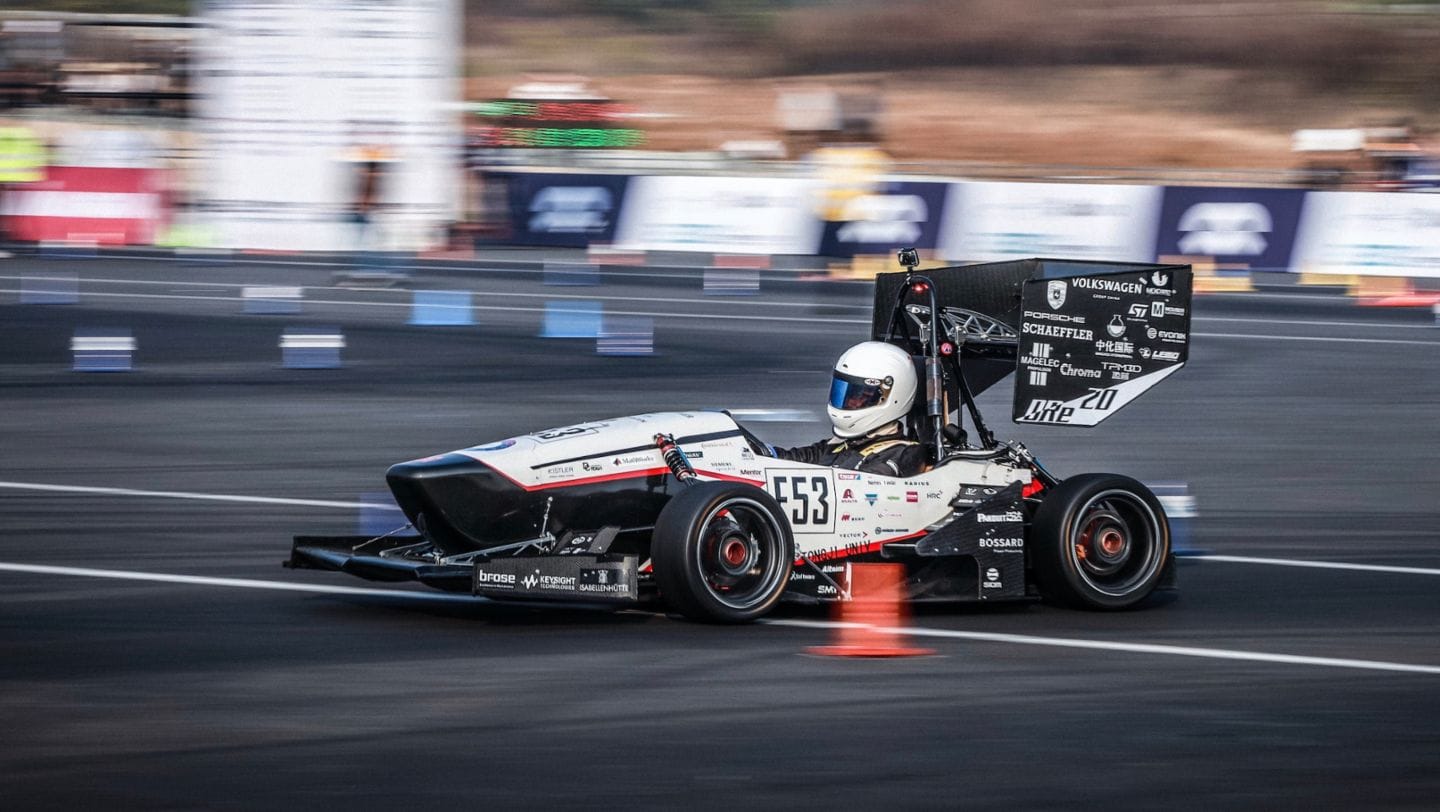
The winning car: Liu Fan’s team and the DRe20 come out ahead of 66 rivals in the all-electric competition. Design and performance are a perfect fit.
Formula Student is not a dedicated racing series championship, but a global innovation competition that dates back to 1981. Teams compete across different disciplines, from design and engineering implementation to vehicle performance. In the practical test segment, the cars must navigate a handling course with obstacles within a time limit. Additionally, they must pass an endurance test and an acceleration test.
Ordinarily, teams from around the world compete against each other, but the pandemic hindered the development progress of students in many countries. A planned Sino-German student exchange was also cancelled due to the outbreak, even though Liu Fan had already begun learning German. As a result, the competition could only be held domestically in China. The contest among 101 teams kicked off in Xiangyang, Hubei Province, lasting six days. Of the Chinese university teams, 67 brought pure electric race cars to the track.
During preparation, the Tongji University team also had to rely on remote communication from home. Liu Fan, who had been recognised as an outstanding student leader by the university in 2017, was elected team captain and took charge of coordination during the competition. “I’m not naturally suited for driving,” he says with a laugh. While competitors still relied on standard solutions for battery control, the Tongji team developed their own core components for the electric vehicle.
Liu Fan authored uniform documentation software for the engineering process and impressed the judges with smooth data exchange and communication. Liu Fan thrives on teamwork: “I love the feeling of implementing solutions with a determined team under high time pressure.” He wants to start a company directly with his classmates—though joining Porsche right away would, of course, be even better. Perhaps they have already taken the first step in that direction: the cooperation between Tongji University and Porsche includes five internship positions for outstanding students each year. Liu Fan is now one of them. And Porsche will never stop fostering exceptional young talent.
Copyright
This article was first published in Porsche customer magazine Christophorus, issue 399.