Title: Getting Things Done at Tongji! Our Students Are Just Too Well-Rounded
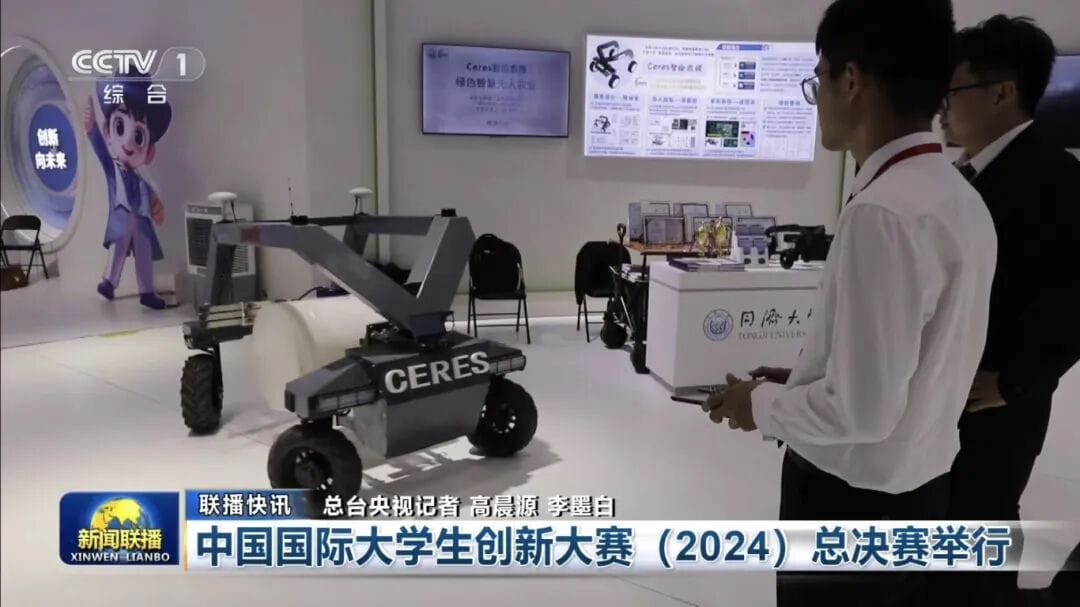
“Look, our team is on Xinwen Lianbo!”
On the evening of October 15,
Zhang Haobo excitedly shared the good news with family and friends.
Though only a one‑second side profile was shown,
moving from campus to farmland,
he not only appeared on Xinwen Lianbo
but also sprinted toward a bright future in smart agriculture.
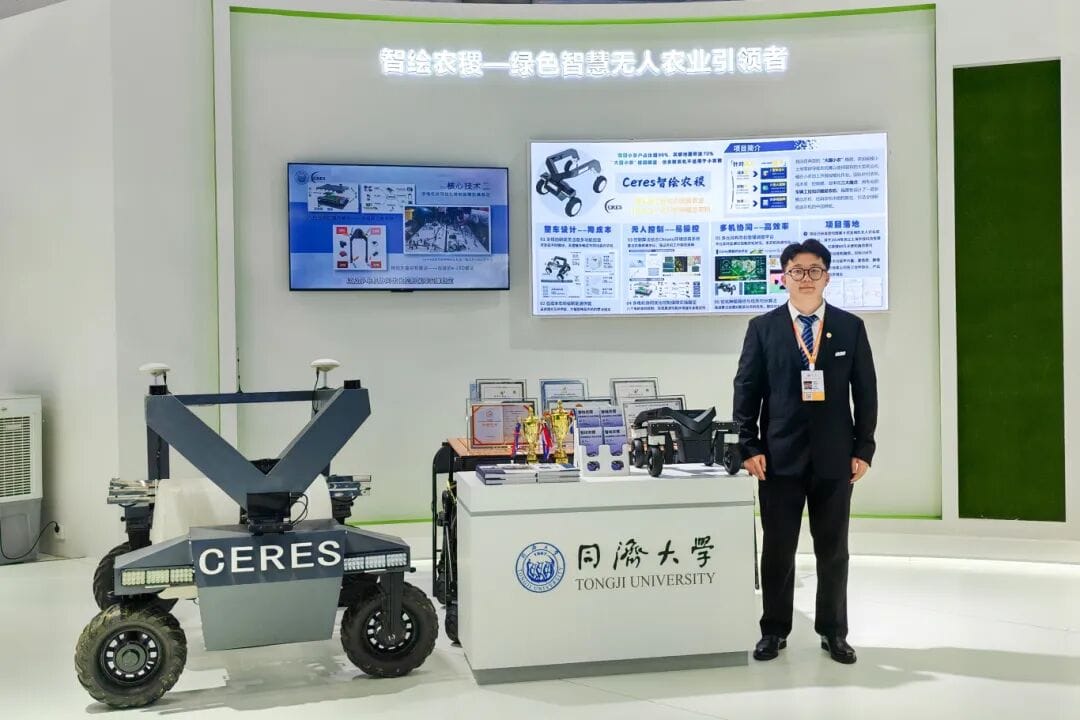
He is a 2020 undergraduate student at Tongji University’s School of Automotive Studies
and the leader of the project Zhi Hui Nong Ji –
Green Intelligent Unmanned Agriculture Pioneer.
The project has just won
a national gold award at the China International College Students’ Innovation Competition 2024
and was selected for the College Student Innovation Achievement Exhibition.
Because of this, he was fortunate
to appear in the CCTV Xinwen Lianbo footage.
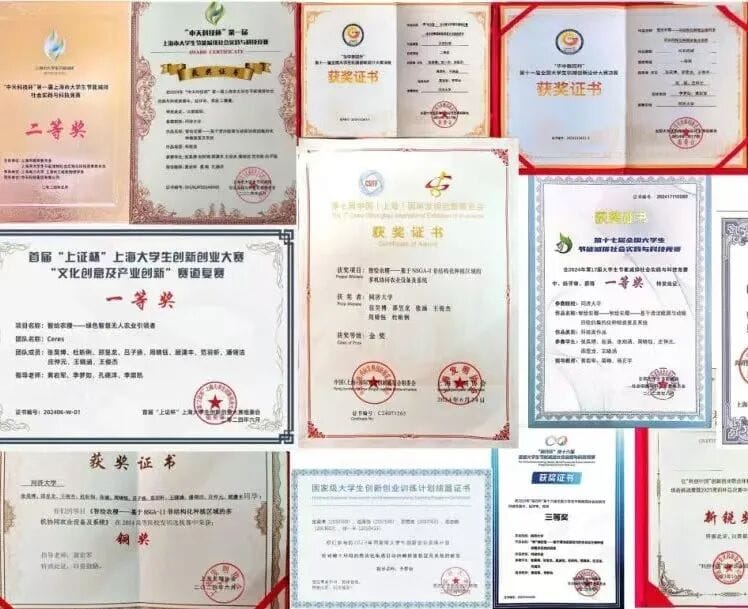
In addition, as the first inventor, he holds two
granted invention patents:
“Autonomous Planting System, Equipment and Storage Medium Based on Multi‑machine Collaboration in Smart Agriculture”
and “Multi‑planting Vehicle Cooperative Control System Based on Path Planning.”
He has also received
the first prize in the National College Student Mechanical Innovation Design Competition,
first prize in the National College Students’ Social Practice and Science Contest on Energy Saving & Emission Reduction,
and six other national‑level awards,
a municipal gold award in the “Challenge Cup,”
the Shanghai College Student Invention Award, and 12 other provincial and ministerial awards,
the Baosteel Outstanding Student Award,
and more.
This story starts with sea buckthorn…
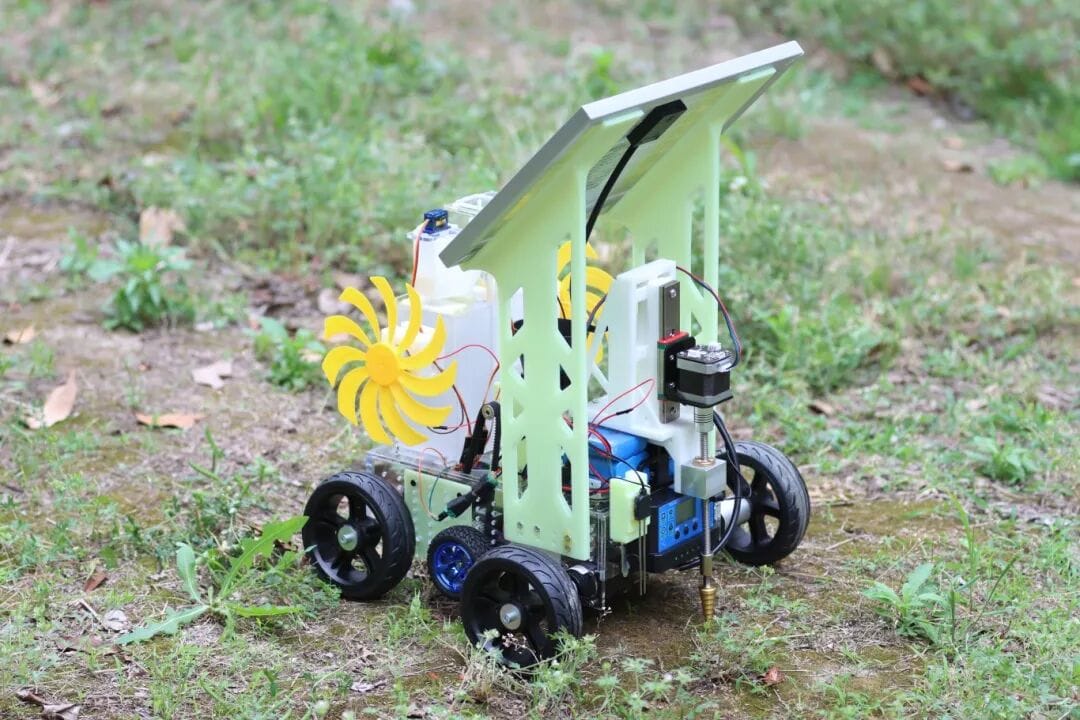
First‑generation machine: sea buckthorn transplanter
In ecological management,
sea buckthorn plays an important role.
It is a globally recognized economic protective plant
and has been praised by the United Nations Environment Programme as
a pioneer species in ecological construction.
As a native of Ordos, Inner Mongolia,
Zhang Haobo has been patrolling forests and transplanting seedlings since childhood with his grandfather, a forest ranger, and is quite familiar with sea buckthorn.
“My grandpa worked very hard planting sea buckthorn,
needing to wear three or four pairs of gloves to avoid being pricked by thorns.”
Sea buckthorn is still mainly planted manually.
During the summer break after his first year at university, Zhang Haobo conceived the idea
of building a mechanized planting device.
With his two roommates from the same major as the core,
they recruited across disciplines on campus to form
the Ceres startup team.
It took a year to complete the development of the first‑generation machine.
Due to real‑world constraints, it was not put into practical use
and has now become a science‑popularization teaching aid at the Mengtian Science and Innovation Farm.
Fear not high mountains and perilous roads; just keep moving forward
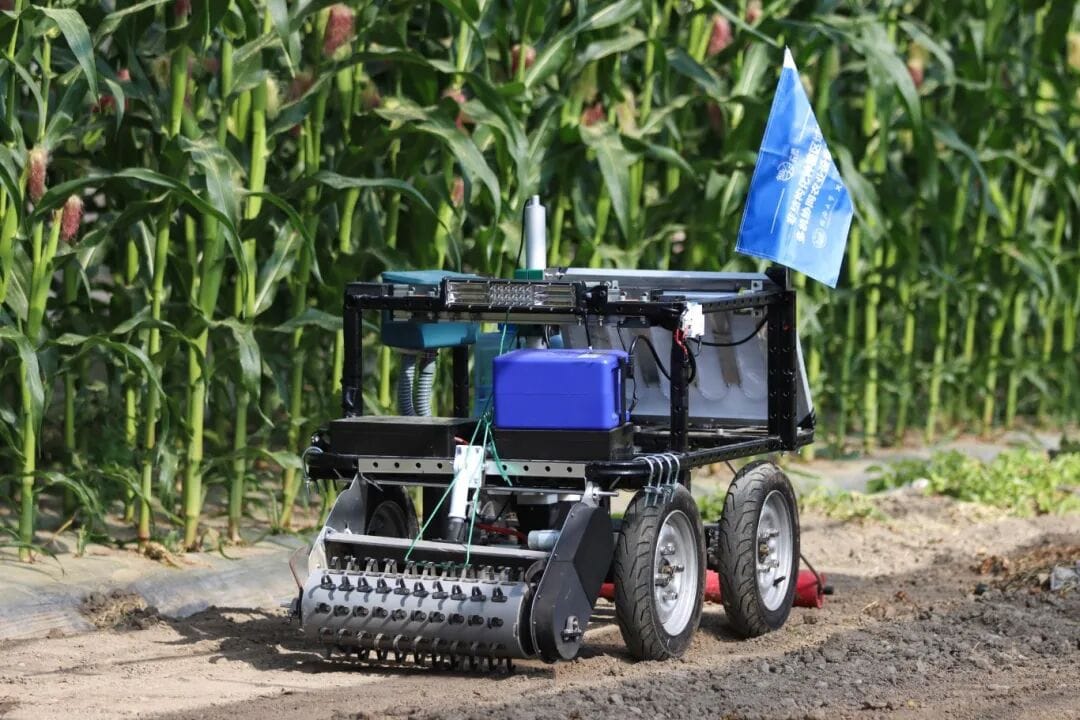
Second‑generation machine: integrated intelligent agricultural chassis
Without much hesitation,
the team quickly threw themselves into the development of the second‑generation machine.
During research, the team discovered that
due to complex terrain and scattered farmland,
traditional high‑cost, low‑efficiency agricultural machinery
meant an expensive burden for many farmers, especially smallholders.
“We came up with the idea of using our professional knowledge
to design intelligent solutions for these farmers.”
The team decided to develop an intelligent agricultural machine
capable of adapting to complex terrain
to help smallholders reduce the costs of purchasing and using agricultural machinery.
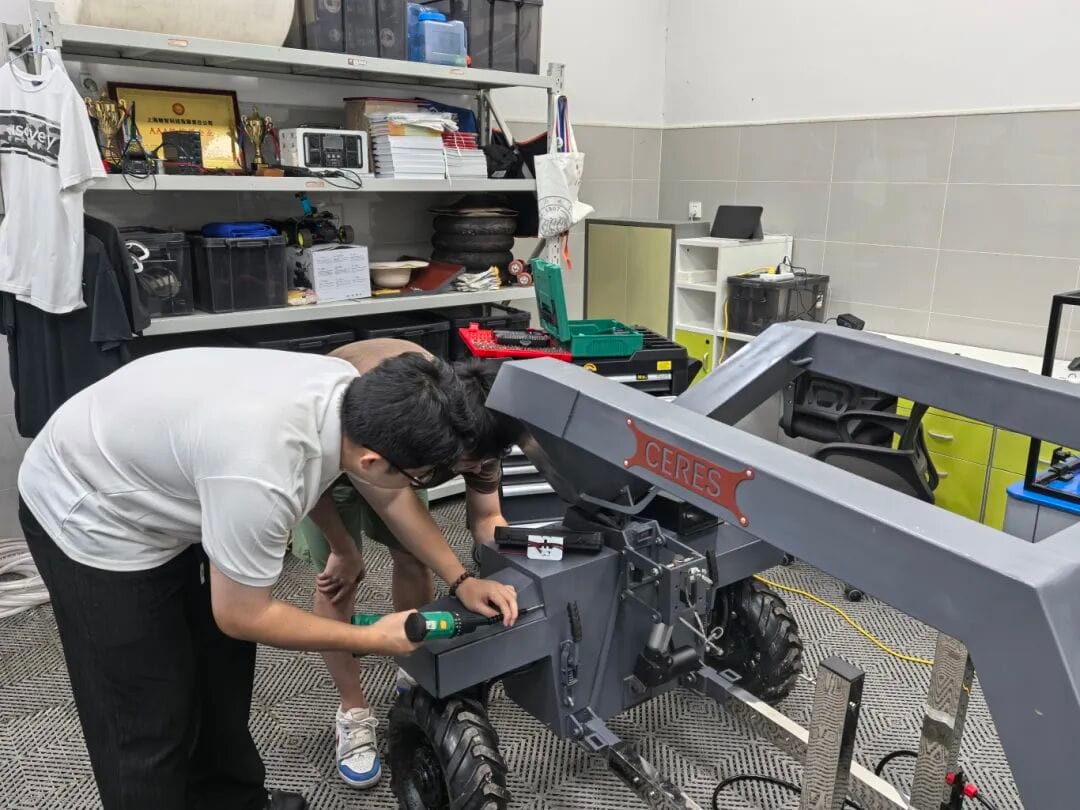
“The university’s education model integrating industry and education
has laid a solid foundation for us.”
For example,
the Vehicle Dynamics course
provided theoretical support for the design of the all‑terrain chassis,
while studying Automatic Control Theory
helped the team solve the path‑planning and control problems
of autonomous driving.
“Many of our core members are in DIAN Racing,
and from planning drawings to building complete vehicles,
we have accumulated a wealth of car‑building experience.”
Founded in 2013, DIAN Racing
the Formula Student Electric team of Tongji University,
has won numerous honors in domestic and international competitions
and serves as a practical base for Tongji students to realize their automotive dreams.
Zhang Haobo and core team members Shao Yulong and Liu Changjie
were once key members of DIAN Racing.
The team also includes outstanding students from many other schools, such as the School of Mechanical and Energy Engineering
and the College of Design and Innovation,
responsible for mechanical structure design, appearance design, and other tasks.
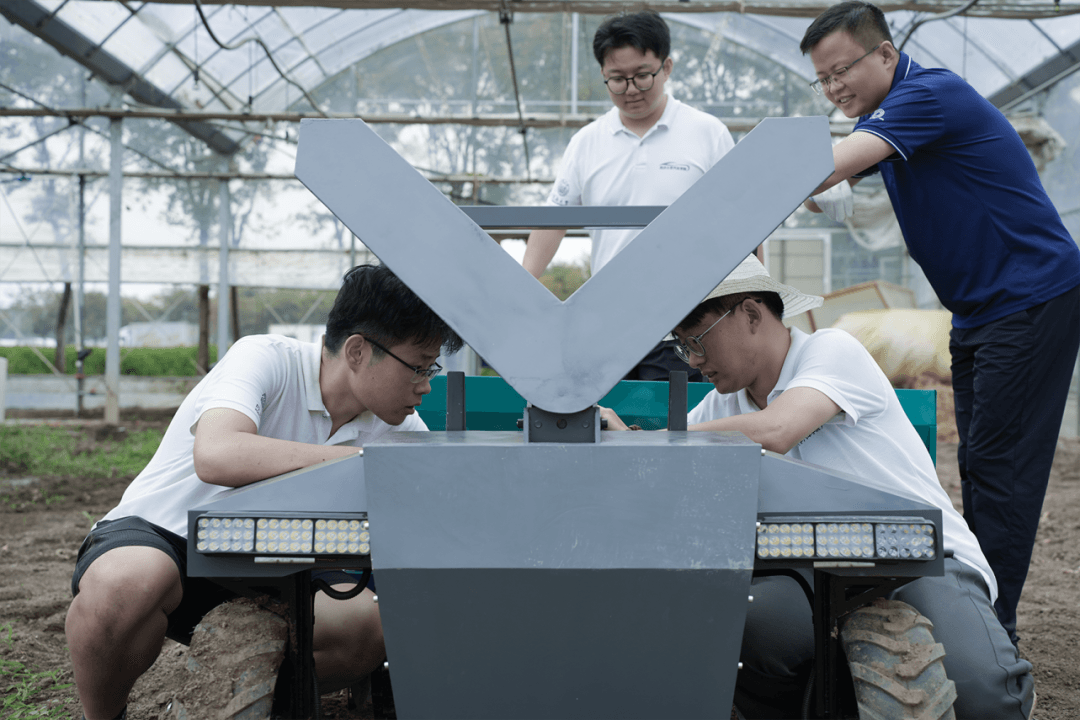
“Professor Huang Yanjun has had a particularly profound influence on me,
encouraging me to dare to imagine and to create.”
Zhang Haobo said that besides the platform provided by the university,
the faculty also offered strong support to the team.
Faculty advisor Professor Huang Yanjun often
goes into the fields alongside the team
and provides crucial advice
on project design and direction.
It is precisely based on the university’s education model integrating industry and education,
the faculty’s wholehearted guidance,
the interdisciplinary academic environment,
and the members’ burning passion for excellence
that they were quickly able to complete an all‑in‑one agricultural machine
capable of performing various simple planting tasks independently.
Next steps must yield the “true scripture”
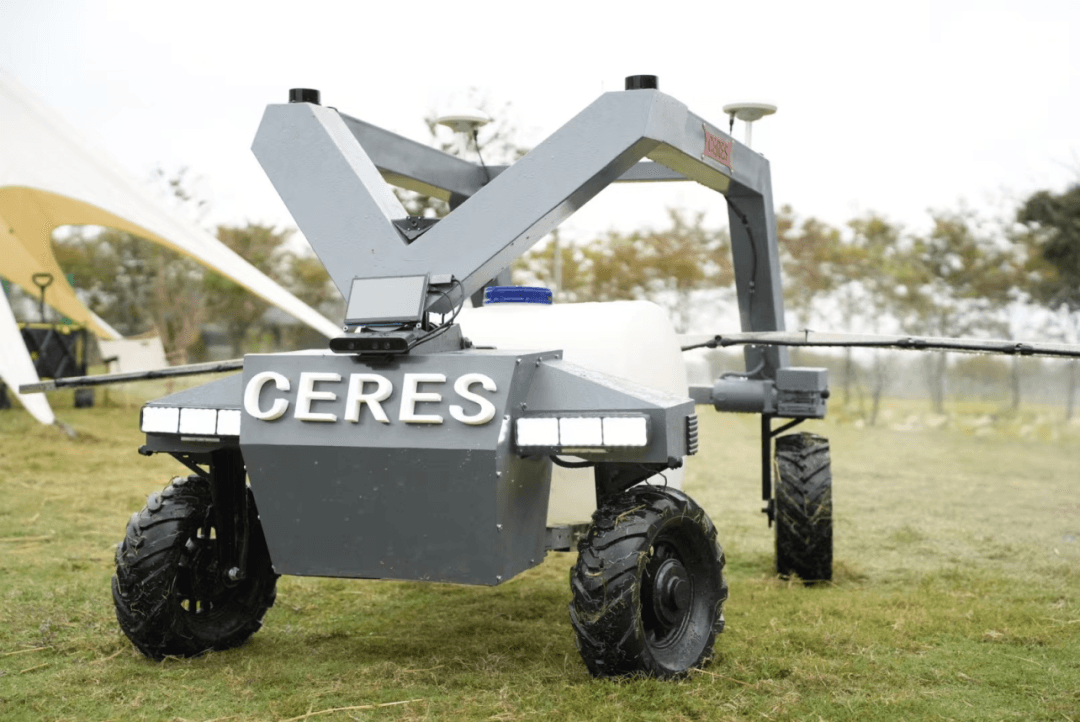
Third‑generation machine: modular all‑terrain intelligent agricultural chassis
“We soon realized that
an all‑in‑one solution cannot adapt to diverse and complex planting scenarios,
so we had to take a modular path.”
Zhang Haobo said they aim to create
a precision facility agriculture solution consisting of
“N planting vehicles + 1 set of software and hardware”
through all‑terrain multi‑machine collaboration,
helping smallholders achieve smart planting
and promoting the green transformation of agriculture.
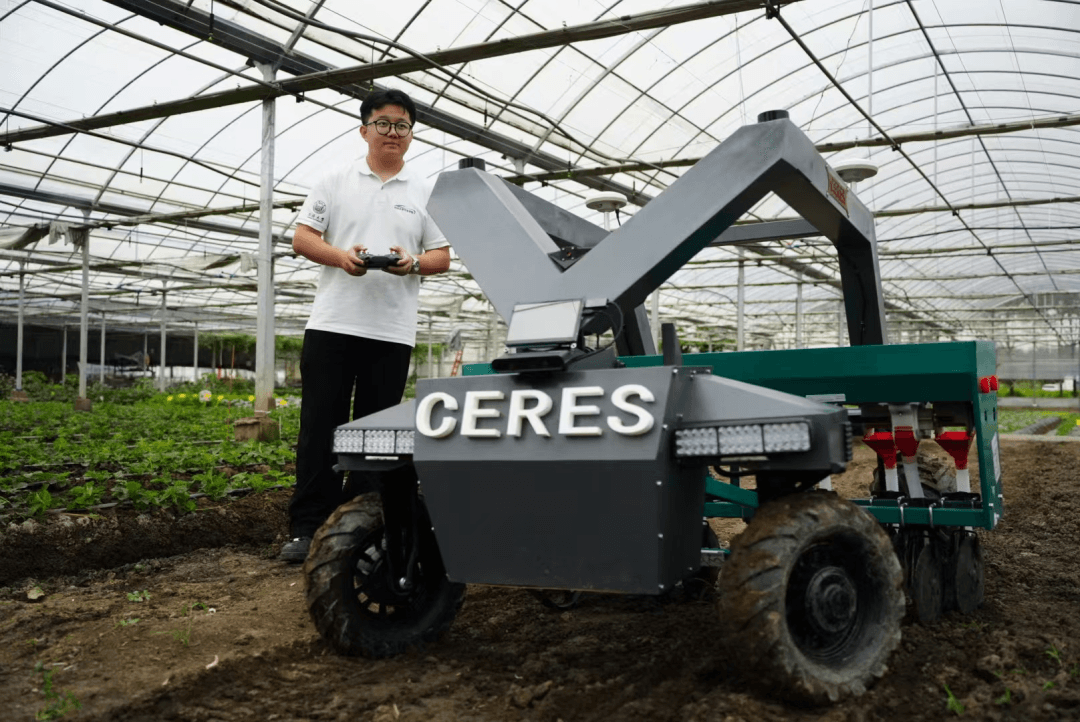
The team adopted a four‑wheel independent drive and steering system.
Each wheel has its own drive motor and steering motor;
the combination of four wheels and eight motors ensures
that even on slopes with a 60‑degree inclination,
the machine still has good maneuverability.
At the same time, the modular design allows
users to simply swap out add‑on modules
to perform multiple operations such as plowing, planting, and irrigation,
greatly reducing usage costs.
“Currently, I have shifted my focus
to research on end‑to‑end autonomous driving technology.”
Zhang Haobo said that although the third‑generation machine’s autonomous driving
is still at the remote‑control stage,
combining it with the Chrono multi‑body dynamics simulation system
ensures precision operations of the agricultural machinery in complex environments.
The team has also developed a multi‑machine collaboration system
that optimizes task allocation through an intelligent dispatching platform.
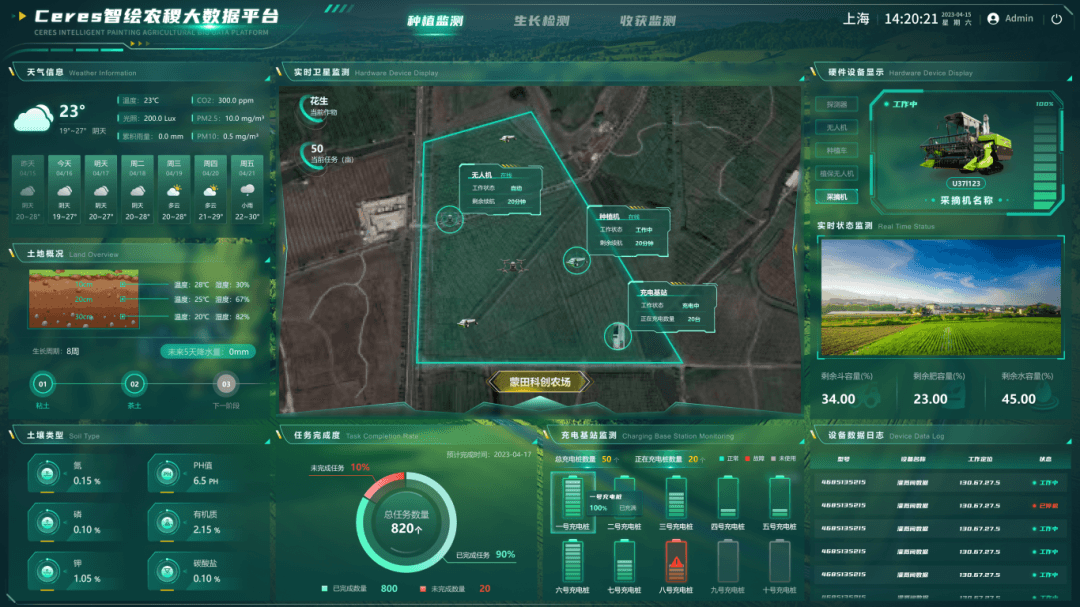
“We are not just building agricultural machinery;
we also hope to build China’s agricultural big data well.”
Zhang Haobo explained that the team developed the
Ceres Zhi Hui Nong Ji big data platform,
which, based on the agricultural operation cycle, is divided into three major functional modules:
planting monitoring, growth monitoring, and harvest monitoring.
Among them, planting monitoring and harvest monitoring
focus on the intelligent agricultural machinery itself,
while growth monitoring focuses on the crops themselves.
Through visual deep‑learning algorithms,
crop growth is monitored
to analyze pest conditions and water‑fertilizer requirements.

“In the future,
I will continue to pursue a doctoral degree at Tongji
to take ‘Zhi Hui Nong Ji’ further!”
Zhang Haobo said smart agriculture is the trend of the future.
On the stage of the new era,
Tongji students have great potential to make a difference.
Source: Party Committee Publicity Department, School of Automotive Studies
CCTV News
Photos: provided by interviewee
Text/editing: Fan Zongxin
Editor‑in‑charge: Nie Yangyang